
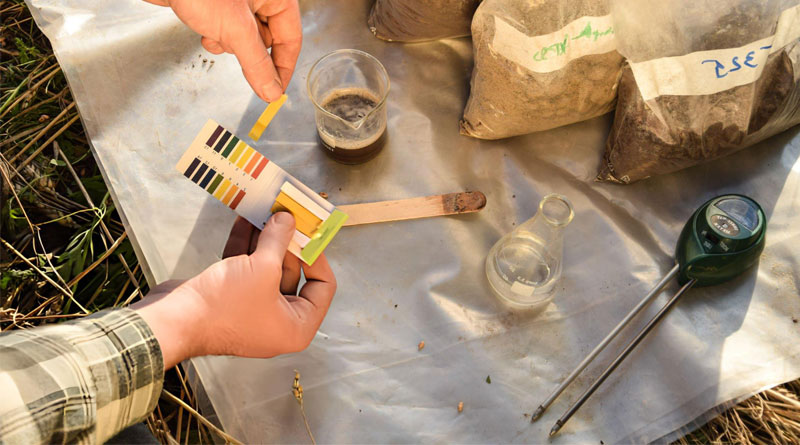
Best Soil Test Kits of 2026
Investing in a reliable soil test kit can save you time and money, preventing over-fertilization and ensuring your plants receive exactly what they need to flourish. This guide delves into the best soil test kits available, helping you choose the perfect tool to unlock your garden’s full potential.
1. Luster Leaf 1880 Rapitest Electronic 4-Way Analyzer

- Measurement: Soil pH, Moisture, Fertility, Sunlight
- Display: Large, easy-to-read scale plate
- Instructions: Simple, extensive instructions/recommendations included
- Application: Fruits/veggies, trees/shrubs, plants/flowers, grasses/lawns
The Luster Leaf 1880 Rapitest Electronic 4-Way Analyzer offers an incredibly versatile and cost-effective solution for gardeners looking to gain comprehensive insights into their soil and growing environment. This single electronic device efficiently measures four critical factors: soil pH, moisture content, fertility levels, and even ambient sunlight. This multi-functionality presents significant value. Its design emphasizes user-friendliness. The inclusion of extensive instructions and recommendations further enhances its utility.
This analyzer is a practical tool for a wide range of gardening applications, suitable for everything from delicate flowers and robust trees to productive vegetable patches and sprawling lawns. By providing immediate feedback on key environmental factors, it empowers gardeners to proactively address potential issues before they impact plant health, leading to more successful growth and abundant yields. Its electronic nature offers consistent readings, making it a reliable companion for both novice and experienced gardeners seeking an all-in-one solution for optimizing their planting conditions and ensuring their greenery thrives.
- Pros:
- Measures four key parameters
- Excellent value for money
- Easy to read display
- Cons:
- Relies on electronic components
- May require periodic calibration
2. Mosser Lee/Soil Master ML1210 Soil Test Kit

- Test Capacity: 40 tests
- Guidance: Illustrated instructions and 8-page resource booklet
- Application: Lawns, gardens, potted plants
- Results: Immediate
The Mosser Lee/Soil Master ML1210 Soil Test Kit is a straightforward and effective solution for gardeners seeking to understand their soil’s fundamental composition quickly. Designed for ease of use, this kit includes clear, illustrated instructions that guide you through each step of the testing process. With the capacity for 40 individual tests, you can thoroughly assess various areas of your garden, lawn, or even multiple potted plants throughout the growing season. The accompanying 8-page resource booklet further enhances its value.
One of the most appealing features of the Mosser Lee kit is its ability to deliver immediate results. This allows gardeners to test their soil right before planting. Whether you’re preparing a new garden bed, troubleshooting issues with an existing lawn, or looking to give your potted plants a boost, this kit provides actionable data quickly. By understanding your soil’s needs, you can apply the correct amendments. Its simplicity and speed make it an excellent choice for regular soil monitoring.
- Pros:
- Easy-to-follow instructions
- Includes a helpful resource booklet
- Provides immediate results
- Cons:
- Tests fundamental parameters only
- Requires some manual interpretation
3. HSLGOVE 7-in-One Dual Screen Soil Tester

- Measurements: Soil moisture, pH, fertility, light, soil temp, air temp, air humidity
- Display: Dual screen (dial + LCD)
- Probe Material: 3 kinds of quality metal material
- Probe Length: Approximately 6.8 inches
The HSLGOVE 7-in-One Dual Screen Soil Tester is an incredibly comprehensive tool, especially designed for beginners seeking a holistic view of their plant’s environment. This innovative device goes beyond basic soil parameters, offering a remarkable seven different measurements: soil moisture, pH, fertility, sunlight intensity, soil temperature, air temperature, and air humidity. The unique dual-dial design, combining both an analog soil meter and a digital LCD screen, allows for quick, versatile readings. This level of detail empowers gardeners to precisely understand the complex conditions influencing their plants.
Ease of use is a cornerstone of the HSLGOVE tester. With a simple push of a button to switch modes and quick insertion of the 6.8-inch, triple-metal probe into the soil, you can obtain results within 3-5 minutes. The robust, single-probe design minimizes disturbance to plant roots. Its wide application range covers everything from indoor house plants to outdoor lawns and farms, making it a versatile gift for any plant enthusiast. The comprehensive data provided by this 7-in-1 meter allows for proactive adjustments to watering, feeding, and placement.
- Pros:
- Measures 7 critical parameters
- Dual screen for diverse readings
- Durable, single probe design
- Cons:
- Not for testing liquid
- Requires 3 batteries
4. Luster Leaf Products 1663 80 Professional Soil Test Kit

- Test Capacity: 80 tests (20 each for pH, N, P, K)
- Storage: Sturdy plastic case
- Guidance: Simple and detailed instructions
- Reference: pH preference list for hundreds of plants
The Luster Leaf Products 1663 80 Professional Soil Test Kit is an excellent choice for gardeners who require a more detailed understanding of their soil’s primary nutrient levels and pH. This kit provides the components for a substantial 80 tests, divided equally among four crucial parameters: soil pH, Nitrogen (N), Phosphorus (P), and Potassium (K). This generous testing capacity allows for thorough and repeated assessments across various sections of your garden or over different growing seasons. Everything is neatly organized and protected within a sturdy plastic case.
Beyond just providing test results, this kit truly shines with its comprehensive support materials. It includes simple yet detailed instructions that make the testing process clear and manageable for users of all experience levels. Furthermore, a valuable pH preference list for hundreds of plants is provided, giving you actionable insights into the ideal conditions for your specific crops or ornamentals. Crucially, the kit also offers tips for gardening and altering soil conditions based on your test results. This makes the Luster Leaf 1663 an invaluable resource for optimizing soil health.
- Pros:
- High test capacity (80 tests)
- Tests all major nutrients (N, P, K) and pH
- Includes a useful plant pH preference list
- Cons:
- Requires manual chemical analysis
- Results need careful interpretation
5. Lamotte Model El – Turf and Garden Soil Test Kit
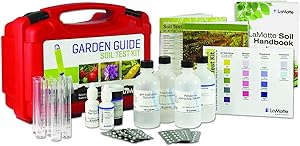
- Measurements: Nitrogen, Phosphorus, Potassium, Soil pH
- Test Capacity: 15 tests each for N, P, K; 30 tests for pH
- Guidance: Diagrammed instructions
- Purpose: Soil science education, garden analysis
The Lamotte Model El – Turf and Garden Soil Test Kit is a professional-grade solution designed for those who desire a deeper, more educational understanding of their soil’s chemistry. Ideal for both garden enthusiasts and those involved in soil science education, this comprehensive kit allows for rapid testing of critical soil parameters: nitrogen, phosphorus, potassium, and soil pH. With a generous capacity of 15 tests for each nutrient (N, P, K) and 30 tests for pH, it enables thorough analysis across various garden sections or for repeated seasonal monitoring. The kit stands out with its meticulously diagrammed instructions and durable laminated color charts.
What truly elevates the Lamotte kit is the inclusion of extensive educational resources. It comes complete with a “Garden Guide” manual and the authoritative “LaMotte Soil Handbook.” These invaluable guides not only help interpret the test results but also provide detailed lime and fertilizer recommendations tailored to your soil’s specific needs. This transformative feature empowers users to move beyond mere data collection. Packaged with everything required for comprehensive soil testing, this kit is perfect for serious gardeners and educators looking to master their soil’s specifics before embarking on any planting project.
- Pros:
- Professional-grade accuracy
- Includes comprehensive educational handbooks
- Generous test capacity
- Cons:
- More involved chemical testing
- Higher initial cost
6. MySoil Soil Test Kit
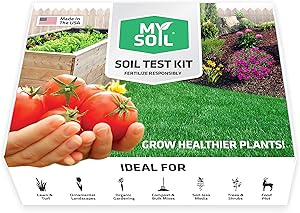
- Analysis Type: Professional mail-in lab analysis
- Parameters Measured: 13 plant-available nutrient levels (including Nitrogen) and pH
- Results Turnaround: 6-8 days
- Recommendations: Custom organic and non-organic fertilizer recommendations
The MySoil Soil Test Kit represents the pinnacle of accuracy and tailored advice for optimizing your lawn and garden potential. Unlike at-home testing methods, this kit offers a professional mail-in laboratory analysis. The lab meticulously measures 13 plant-available nutrient levels, including crucial nitrogen, along with your soil’s pH. This depth of analysis goes far beyond basic kits. The process is streamlined for convenience: simply collect your soil sample using the provided kit, mail it in the prepaid envelope to their testing lab, and receive detailed results within 6-8 days.
What truly sets the MySoil kit apart are its custom recommendations. Once your results are in, you’ll receive clear guidance on what products to apply, how much to use, and when to apply them, with options for both organic and non-organic fertilizers. This personalized approach eliminates guesswork. Whether you’re managing a vast farm, a small urban garden, a vibrant lawn, or even hydroponic systems, this kit is adaptable to any growing scenario. It empowers you to cultivate the healthiest, most sustainable plants possible by providing an exact roadmap for amending your soil, ensuring your plants receive precisely what they need to thrive.
- Pros:
- Professional lab-grade accuracy
- Measures 13 detailed nutrient levels
- Customized, actionable recommendations
- Cons:
- Requires mailing sample
- Not immediate results (6-8 days)
7. Whitetail Institute Laboratory Soil Test Kit
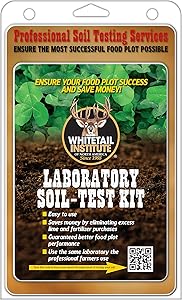
- Application: Deer food plots
- Analysis Type: Laboratory soil test
- Turnaround Time: Results within one week
- Support: Professional consultation included
The Whitetail Institute Laboratory Soil Test Kit is specifically designed for serious land managers and hunters dedicated to creating the most successful deer food plots possible. This specialized kit offers a professional laboratory analysis. By understanding the precise nutrient and pH levels, you can make informed decisions that significantly enhance forage growth, attracting and sustaining a healthy deer population. The kit is incredibly easy to use, coming with everything you need to collect and send your soil sample to the lab, streamlining a process that might otherwise seem complex for those new to food plot management.
A key benefit of this kit is its efficiency and comprehensive support. Results are typically delivered within one week via mail or email, allowing for timely adjustments to your planting strategy. More importantly, the Whitetail Institute includes professional consultation. This expert guidance is invaluable, ensuring you apply the right amounts of fertilizer and lime, which not only saves you money by preventing wasteful applications but also maximizes the effectiveness of your food plot. For anyone committed to optimizing their deer habitat through superior forage, this kit provides the scientific foundation for unparalleled success.
- Pros:
- Ensures successful food plots
- Professional lab analysis
- Includes expert consultation
- Cons:
- Specific to food plot use
- Requires mailing sample
How to Choose Soil Test Kits
Understanding the composition and health of your garden’s soil is arguably the most crucial step toward successful gardening, whether you’re nurturing a sprawling vegetable patch, maintaining a pristine lawn, or cultivating delicate flowers. Soil test kits offer a convenient and effective way to gain critical insights into what your plants need to thrive. From revealing pH imbalances to detecting nutrient deficiencies or excesses, a good soil test kit empowers you to make informed decisions about amendments and fertilization. But with a plethora of options available, choosing the “best” kit can feel overwhelming. This guide will walk you through the essential factors to consider, ensuring you select a soil test kit that perfectly matches your gardening needs and expertise.
Why Soil Testing is Essential for Every Gardener
Many gardeners underestimate the profound impact of healthy soil on plant vitality. Without proper testing, you might be guessing at your soil’s needs, leading to suboptimal growth, wasted fertilizers, and even damaged plants. Soil testing provides a scientific basis for your gardening practices. For instance, knowing your soil’s pH is critical because it dictates nutrient availability; a pH too high or too low can lock essential nutrients away from plant roots, even if those nutrients are present in abundance. Similarly, understanding the levels of macronutrients like nitrogen, phosphorus, and potassium (N-P-K) helps you avoid over-fertilization, which can harm plants and the environment, or under-fertilization, which starves them.
Benefits of Regular Soil Testing
- Optimized Plant Growth: Ensures plants receive the right nutrients at the right pH.
- Cost Savings: Prevents unnecessary purchase and application of fertilizers and amendments.
- Environmental Protection: Reduces nutrient runoff into waterways caused by over-fertilization.
- Problem Solving: Helps diagnose issues like stunted growth, yellowing leaves, or poor fruit set.
- Long-Term Soil Health: Contributes to sustainable gardening practices by building soil fertility over time.
Types of Soil Test Kits Available
Soil test kits generally fall into a few main categories, each with its own advantages and disadvantages. Your choice will largely depend on your budget, desired level of detail, and willingness to engage in the testing process.
1. Home DIY Kits (Liquid/Powder Chemical Kits)
These are often the most affordable and readily available kits. They typically involve mixing a soil sample with a chemical solution and comparing the resulting color change to a chart to determine pH and basic N-P-K levels. They are excellent for quick checks and getting a general idea of your soil’s condition.
- Pros: Inexpensive, immediate results, easy to use for basic readings.
- Cons: Less precise, results can be subjective due to color interpretation, typically only measure N-P-K and pH.
2. Electronic Meters/Probes
Electronic meters are probes that you insert directly into the soil to get readings for pH, moisture, and sometimes light or even temperature. They are very convenient for on-the-spot checks and can often provide multiple readings from a single device.
- Pros: Immediate digital readings, no chemicals involved, reusable, often measure multiple parameters (pH, moisture, light, temp).
- Cons: Can be less accurate than chemical or lab tests, requires batteries, calibration might be necessary, doesn’t test specific nutrient levels beyond general fertility.
3. Professional Mail-In Lab Tests
These kits involve collecting a soil sample and sending it to a professional laboratory for analysis. While more expensive and requiring a waiting period for results, they offer the most comprehensive and accurate data, often including micronutrient levels and detailed recommendations.
- Pros: Highly accurate and detailed results, measures a wide range of nutrients (macro and micro) and other soil characteristics, includes tailored recommendations from experts.
- Cons: More expensive, results take longer (days to weeks), requires mailing a sample.
Key Factors to Consider When Choosing a Soil Test Kit
To narrow down your options, consider these important factors that align with your gardening goals and preferences.
1. Accuracy and Precision
For casual gardening, a home DIY kit or electronic meter might suffice. However, if you’re a serious gardener, farmer, or dealing with persistent plant problems, a professional lab test offers unparalleled accuracy. Understand that “immediate results” from home kits often mean less precision compared to laboratory analysis.
2. Parameters Measured
At a minimum, you’ll want to test for pH, nitrogen (N), phosphorus (P), and potassium (K). Some kits also measure moisture, light, temperature, or a wider array of micronutrients (like calcium, magnesium, sulfur, zinc, iron, copper, manganese, boron). Decide which parameters are most critical for your plants and soil type.
3. Ease of Use
Are you comfortable mixing chemicals and interpreting color charts? Or do you prefer the simplicity of an electronic probe with a digital display? Mail-in kits are generally easy in terms of collection but require waiting. Choose a kit whose process you find manageable and reliable.
4. Cost and Value
Prices vary significantly. DIY kits are the cheapest, followed by electronic meters, and then professional lab tests. Consider the long-term value: an accurate, comprehensive lab test might cost more initially but save you money by preventing wasted amendments and ensuring healthier plants.
5. Number of Tests
Some kits offer only a few tests, while others provide enough reagents for dozens. If you have a large garden, multiple plots, or plan to test frequently throughout the season, a kit with a higher test capacity will be more economical in the long run.
6. Recommendations and Interpretations
A kit that merely gives you numbers isn’t as helpful as one that also provides actionable advice. Look for kits that include a plant pH preference guide, instructions on how to interpret results, and specific recommendations for soil amendments based on your readings. Professional lab tests excel in this area, offering detailed reports and often personalized consultation.
7. Durability and Reusability
Electronic meters are typically reusable, though some may require calibration. Chemical kits have a limited number of tests based on the reagents provided. Consider if you need a one-time test or a tool for ongoing monitoring.
Tips for Getting the Most Out of Your Soil Test Kit
- Proper Sample Collection: Always follow the kit’s instructions for collecting soil samples. Take samples from various spots in your garden, at the correct depth (usually 4-6 inches for gardens, 2-4 inches for lawns), and mix them together for a representative sample.
- Test at the Right Time: The best time to test is typically in the spring before planting or in the fall after harvest. Avoid testing immediately after applying fertilizers or amendments.
- Cleanliness: Ensure all equipment (if reusable) is clean to avoid contamination that could skew results.
- Act on Results: The test is only useful if you use the information. Apply recommended amendments gradually and retest after a season to see the impact.
- Keep Records: Document your test results, amendments applied, and plant performance. This helps track changes over time and refine your gardening strategy.
Conclusion
Choosing the best soil test kit involves balancing accuracy, cost, ease of use, and the level of detail you require. For a quick, general overview, a simple home DIY kit or electronic meter might be sufficient. However, for serious gardeners, those troubleshooting persistent issues, or anyone aiming for optimal plant health and resource efficiency, investing in a professional mail-in lab test is undoubtedly the superior choice. Regardless of your selection, remember that regular soil testing is an investment in the health and productivity of your garden, transforming guesswork into informed action and leading to more vibrant, thriving plants.