Best Compost Thermometers of 2026
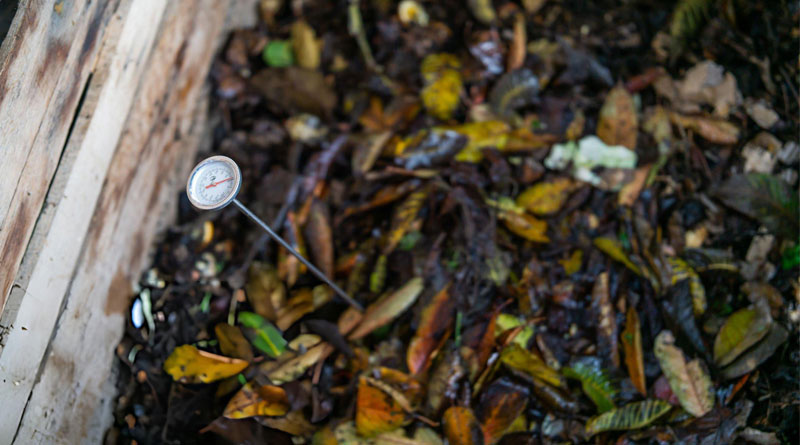
A compost thermometer allows you to monitor your pile’s heat, ensuring it reaches and maintains the optimal temperature zones for rapid decomposition while also killing off weed seeds and pathogens. Choosing the right thermometer can make all the difference in turning your organic waste into gardening gold.
1. Reotemp 20-Inch Backyard Compost Thermometer
- Length: 20 inches
- Stem Material: Stainless steel
- Seal: Hermetically sealed to prevent fogging
- Guide: Free PDF digital compost guide included
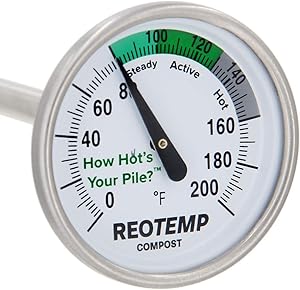
The Reotemp 20-Inch Backyard Compost Thermometer stands out as an excellent choice, particularly for those new to composting. It’s not just a thermometer; it’s a comprehensive tool designed to empower beginner composters. Included with your purchase is a free PDF digital compost guide. This thoughtful addition transforms a simple measuring device into an educational resource.
Crafted from high-quality stainless steel, this thermometer boasts a robust 20-inch stem with a 1/4″ diameter, built to withstand the rigors of frequent use in a compost pile. Its hermetically sealed dial prevents fogging, guaranteeing clear readability in varying weather conditions. The easy-to-read dial, developed by composting experts, features three distinct temperature zones.
- Pros:
- Includes comprehensive digital compost guide
- Durable stainless steel construction
- Hermetically sealed, fog-proof dial
- Cons:
- Only Fahrenheit scale
- 20-inch length may be short for very large piles
2. VIVOSUN 20-Inch Backyard Compost Thermometer

- Length: 20 inches (50.8cm)
- Material: Rugged 304 stainless steel
- Accuracy: ± 2°F
- Waterproof Rating: IP55 PC-coated lens
The VIVOSUN 20-Inch Backyard Compost Thermometer offers a blend of precision and durability. With a total length of 20 inches and a sturdy 19.7-inch stem made from rugged 304 stainless steel, it’s designed to reach the core of most compost bins. A key feature is its IP55 waterproof PC-coated lens, which is hermetically sealed to prevent moisture intrusion and fogging. This ensures consistent, clear readings, allowing you to monitor your compost’s temperature with confidence, even in damp conditions or after watering your pile. The ±2°F accuracy helps in understanding the true thermal state of your compost.
The thermometer’s dial is engineered for quick and easy interpretation. This visual guide simplifies the process of knowing when to turn your pile or add more greens/browns to maintain optimal decomposition. Its robust frame, crafted from rustproof stainless steel, and a reinforced connection between the dial and stem promise long-lasting use. Simply insert it about 6cm deep into the center of your compost pile and wait 3-5 minutes for an accurate reading. This VIVOSUN thermometer is a solid choice for anyone looking to effectively manage their compost and boost their garden’s health.
- Pros:
- High accuracy (± 2°F)
- IP55 waterproof lens prevents fogging
- Rugged 304 stainless steel construction
- Cons:
- Only Fahrenheit scale
- Stem diameter 5mm might feel slightly less robust than others
3. Garden Weasel 36-Inch Analog Soil & Composting Thermometer
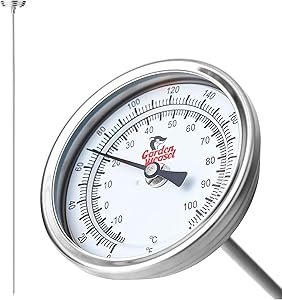
- Probe Length: 36 inches
- Temperature Range: 0 to 220°F (Fahrenheit and Celsius)
- Power: Analog, no batteries required
- Material: High-quality, durable materials
The Garden Weasel 36-Inch Analog Soil & Composting Thermometer is a professional-grade instrument designed for serious composters and gardeners who demand accuracy and durability. Its most striking feature is the extra-long 36-inch probe. This extended length is crucial for large-scale operations or for those with deep bins. Unlike digital alternatives, this analog thermometer operates without batteries. Its easy-to-read dial displays temperatures in both Fahrenheit and Celsius, catering to a wider user base.
Garden Weasel prides itself on unmatched performance and robust construction, distinguishing itself from many lower-quality options on the market. Manufactured from the highest quality materials, this thermometer is built for decades of reliable use, promising longevity and consistent readings through countless composting cycles. The design is tried and true, a testament to its effectiveness and widespread adoption by gardening enthusiasts.
- Pros:
- Extra-long 36-inch probe for deep piles
- Dual Fahrenheit and Celsius scale
- No batteries required (analog)
- Cons:
- Large size might be overkill for small bins
- No specific composting zone indicators on dial
4. REOTEMP Backyard Pro 24-Inch Compost Thermometer

- Stem Length: 24 inches
- Material: Rugged all stainless steel
- Dial Size: 2.5 inches, hermetically sealed
- Guide: PDF Compost Guide included
The REOTEMP Backyard Pro 24-Inch Compost Thermometer is designed for serious home composters who need a bit more reach and robust construction. With a substantial 24-inch stem length, it’s perfectly suited for larger compost piles and bins, allowing users to accurately measure the core temperature where microbial activity is most intense. The thermometer boasts rugged all-stainless steel construction. Its 5/16″ diameter heavy-duty stem provides superior strength.
A standout feature is the 2.5-inch hermetically sealed dial, specifically engineered to prevent fogging, ensuring crystal-clear readability regardless of humidity or temperature fluctuations. The “Read at a Glance” dial simplifies temperature monitoring by incorporating three distinct temperature zones—Steady, Active, and Hot—that quickly communicate the state of your compost pile. This visual feedback helps composters make informed decisions about turning or adding materials.
- Pros:
- 24-inch stem ideal for larger piles
- Heavy-duty all stainless steel construction
- Hermetically sealed, fog-proof dial
- Cons:
- Only Fahrenheit scale
- Slightly higher price point
5. Taylor 20-Inch Compost Thermometer with Leaf Guard

- Temperature Range: 20°F to 180°F (0°C to 80°C)
- Stem Length: 20 inches
- Material: Heavy-duty stainless steel
- Guard: Decorative silicone leaf guard
The Taylor 20-Inch Compost Thermometer with Leaf Guard offers a reliable and aesthetically pleasing solution for monitoring your compost pile’s health. Designed for gardeners of all levels, it provides accurate temperature measurements ranging from 20°F to 180°F (0°C to 80°C), covering the crucial zones for efficient decomposition. The 20-inch stem is a practical length for most home composting bins, ensuring you can reach deep enough to gauge the core temperature without being overly cumbersome. Its construction from heavy-duty stainless steel speaks to its durability, promising a tool that will withstand the challenging conditions within a compost pile and provide long-lasting service.
What truly sets this Taylor thermometer apart is its user-friendly design, enhanced by a decorative silicone leaf guard. This guard not only adds a touch of visual appeal but also provides additional protection for the dial and a more comfortable, secure grip during insertion and removal. The easy-to-read dial simplifies temperature interpretation by clearly indicating “warm,” “active,” and “hot” zones, enabling quick assessments of your pile’s activity. This intuitive design helps gardeners, regardless of their experience, maintain optimal conditions for a healthier compost pile, making it an excellent choice for anyone looking for both functionality and thoughtful design in their composting tools.
- Pros:
- Accurate temperature range (Fahrenheit & Celsius)
- Durable heavy-duty stainless steel
- Decorative and protective silicone leaf guard
- Cons:
- 20-inch stem may be short for very large piles
- Upper range limit of 180°F might miss extreme hot spots
6. REOTEMP Heavy Duty 36-Inch Compost Thermometer
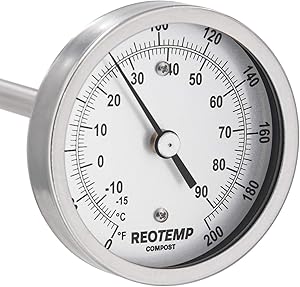
- Stem Length: 36 inches
- Material: Rugged all stainless steel
- Dial Size: Large 3 inches, hermetically sealed
- Scales: Dual Fahrenheit and Celsius
The REOTEMP Heavy Duty 36-Inch Compost Thermometer is a professional-grade instrument built for the most demanding composting needs. Its impressive 36-inch stem length makes it ideal for large-scale operations, commercial composting, or exceptionally deep home piles, ensuring you can consistently reach the thermophilic core for accurate readings. Crafted with rugged, all-stainless steel construction, this thermometer is engineered for extreme durability and longevity, capable of enduring harsh environmental conditions and repeated use. The heavy-duty 5/16″ diameter stem reinforces its robustness, preventing bending or damage when pushed into dense, unyielding compost material.
A significant advantage of this model is its large 3-inch dual-scale dial, displaying temperatures in both Fahrenheit (0 to 200°F) and Celsius (-10 to 90°C), catering to international users or those who prefer metric readings. The dial is hermetically sealed, guaranteeing that moisture and fog won’t obscure your view, maintaining crystal-clear readability at all times. Proudly made in the USA, this REOTEMP thermometer not only offers superior build quality but also comes with the assurance of domestic manufacturing standards. It’s an investment for serious composters seeking maximum reach, exceptional durability, and versatile temperature measurement capabilities.
- Pros:
- Extra-long 36-inch stem for deep piles
- Heavy-duty all stainless steel construction
- Dual Fahrenheit and Celsius scale
- Cons:
- Large size might be excessive for small bins
- Premium price point
7. General Tools 20-Inch Analog Soil & Composting Thermometer

- Probe Length: 20 inches (508mm)
- Temperature Range: 0° to 220°F (-18° to 104°C)
- Dial Size: 2 inches (51mm) with clear glass lens
- Material: Rustproof stainless steel probe
The General Tools 20-Inch Analog Soil & Composting Thermometer offers a straightforward and dependable solution for monitoring temperatures in various agricultural applications, from composting to general gardening. Its 20-inch (508mm) long shaft provides ample reach for most home compost piles and soil beds, ensuring you can accurately gauge critical temperatures. The thermometer boasts a broad temperature range, measuring from 0° to 220°F (-18° to 104°C), which comfortably covers all phases of the composting process, including initial heating, active decomposition, and curing. This versatility makes it a valuable tool for understanding both soil health and compost activity.
Designed with user convenience in mind, the General Tools thermometer features an easy-to-read 2-inch (51mm) wide dial with a clear glass lens, allowing for quick and unambiguous temperature checks. The rugged, rustproof, and long-lasting stainless steel probe ensures durability, making it capable of withstanding the harsh, moist conditions often found in compost and soil. As a recognized leader in specialized precision tools, General Tools delivers on its promise of quality, encouraging artisans and DIYers to work smarter. This thermometer is a reliable choice for anyone seeking a robust, versatile, and no-frills instrument to optimize their composting and gardening efforts effectively.
- Pros:
- Broad temperature range (Fahrenheit & Celsius)
- Rugged, rustproof stainless steel probe
- Clear, easy-to-read 2-inch dial
- Cons:
- 20-inch length may be insufficient for very deep piles
- No specific composting zone indicators
How to Choose Compost Thermometers
Composting is an art and a science, a miraculous process that transforms organic waste into invaluable “black gold” for your garden. While simply piling up organic matter will eventually lead to decomposition, achieving a rapid, efficient, and pathogen-free compost pile requires a bit more intentional management. The unsung hero in this endeavor is the humble compost thermometer. Far from a mere gadget, it’s an essential tool that provides critical insights into the internal dynamics of your pile, allowing you to optimize conditions for microbial activity, speed up decomposition, and ensure a safe, nutrient-rich end product. But with a variety of options on the market, how do you select the best compost thermometer for your specific needs? This guide will walk you through the key factors to consider, helping you make an informed decision.
Why Temperature Matters in Composting
Before diving into thermometer features, it’s crucial to understand why monitoring temperature is so important. Composting is primarily a biological process driven by microorganisms. These microbes generate heat as they break down organic materials. Different temperature ranges support different types of microbes and decomposition rates:
- Mesophilic Phase (Below 100°F / 38°C): This is the initial stage, where moderate-temperature-loving microbes begin the decomposition. It’s slower but essential for breaking down complex molecules.
- Thermophilic Phase (130-160°F / 54-71°C): This is the hot, active composting stage, where high-temperature-loving microbes thrive. Maintaining this range is critical for rapid decomposition, killing weed seeds, and eliminating harmful pathogens like E. coli and Salmonella. This is the sweet spot most composters aim for.
- Curing Phase (Below 100°F / 38°C): After the hot phase, the pile cools down, and a new community of microbes and fungi finishes the stabilization process, creating mature compost.
A compost thermometer allows you to ensure your pile reaches and maintains the thermophilic zone, indicating that your compost is “cooking” efficiently and safely. If the temperature drops too low, it signals a need to turn the pile, add more nitrogen-rich “greens,” or adjust moisture levels. If it gets too hot (above 160°F / 71°C), it indicates that beneficial microbes are dying off, and the pile needs to be turned to introduce oxygen and cool it down slightly.
Key Features to Look for in a Compost Thermometer
1. Probe Length
This is perhaps the most critical factor. Compost piles are generally denser and more active in their core. To get an accurate reading of the internal temperature, your thermometer needs to reach the center of your pile. Standard probe lengths range from 15 to 36 inches. For smaller compost bins or tumblers (1-3 feet deep), a 15-inch or 20-inch probe might suffice. However, for larger, deeper piles or commercial composting systems, a 24-inch or even 36-inch probe is essential. A probe that’s too short will only measure the outer, cooler layers of the pile, giving you misleading information about the core activity.
2. Construction Material and Durability
Compost piles are harsh environments: hot, moist, and often acidic. Your thermometer needs to be built to last. Look for models constructed from high-quality, rust-resistant materials, typically stainless steel (e.g., 304 stainless steel). A sturdy stem diameter is also important, preventing bending or breakage when pushing the probe into dense organic matter. The connection between the dial and the stem should be reinforced to ensure longevity. Avoid thermometers made with cheaper plastics or thin metals that can degrade quickly.
3. Dial Type and Readability
Most compost thermometers are analog, featuring a large, easy-to-read dial. Digital options exist but are less common for deep-pile monitoring and often require batteries. For analog dials, consider:
- Size: A larger dial (2-3 inches in diameter) is easier to read from a distance.
- Clarity: Clear markings and bold numbers are crucial. Some dials feature color-coded zones (e.g., “warm,” “active,” “hot”) that quickly indicate your pile’s status, which is very helpful for beginners.
- Sealing: A hermetically sealed dial or a PC-coated lens prevents moisture from entering and fogging up the display, ensuring continuous readability.
- Units: Most thermometers measure in Fahrenheit, but some offer dual Fahrenheit and Celsius scales, which can be useful depending on your preference.
4. Temperature Range and Accuracy
Ensure the thermometer’s range covers the critical thermophilic composting temperatures (typically up to 180-200°F or 80-90°C). While a range extending beyond this might not be strictly necessary, it offers broader utility. Accuracy is also paramount. Look for thermometers that specify an accuracy within ±2°F or better. A precise reading allows you to make confident decisions about managing your pile.
5. Ease of Use and Maintenance
A good compost thermometer should be straightforward to use. Simply insert it into the pile, wait a few minutes for the reading to stabilize, and then remove it. Minimal maintenance is ideal; simply wipe down the stem after each use to prevent corrosion and keep it clean. Analog thermometers require no batteries, adding to their low-maintenance appeal.
6. Brand Reputation and Warranty
Investing in a thermometer from a reputable brand often provides peace of mind regarding quality and customer support. Many established brands offer warranties or guarantees, which can be a valuable asset for a tool subjected to demanding conditions. Some brands also include composting guides or resources, which are especially beneficial for newcomers.
Tips for Using Your Compost Thermometer Effectively
- Placement: Always insert the probe deep into the center of the pile, as this is where the hottest temperatures are typically found. If your pile is large, take readings in several locations.
- Waiting Time: Allow 3-5 minutes for the thermometer to stabilize and provide an accurate reading.
- Frequency: During the active thermophilic phase, check the temperature daily or every other day. Once the pile cools down, weekly checks are usually sufficient.
- Action: Use the readings to guide your actions. If the temperature is too low (<100°F / 38°C), consider turning the pile, adding moisture, or balancing your greens-to-browns ratio. If it’s too high (>160°F / 71°C), turn the pile to introduce oxygen and release excess heat.
- Cleaning: Wipe the thermometer stem clean after each use to prevent residue buildup and ensure hygiene.
Common Mistakes to Avoid
- Not burying deep enough: Surface readings are often inaccurate and misleading.
- Ignoring the readings: A thermometer is only useful if its data is acted upon.
- Using a meat thermometer: While they measure temperature, meat thermometers are typically too short and not designed for the harsh conditions of a compost pile.
- Not cleaning the probe: This can lead to corrosion and inaccurate readings over time.
Conclusion
Choosing the best compost thermometer doesn’t have to be complicated. By prioritizing probe length suitable for your pile size, durable stainless steel construction, a clear and sealed dial, an appropriate temperature range, and reliable accuracy, you can select a tool that will serve you well for years. A quality compost thermometer empowers you to take control of your composting process, transforming guesswork into informed action. It ensures your organic waste breaks down efficiently, sanitizes effectively, and ultimately yields the highest quality compost to nourish your garden. With the right thermometer in hand, you’ll be well on your way to creating rich, vibrant soil and enjoying the bountiful benefits of successful composting.