Best Manual Lawn Edgers of 2026
While power edgers offer speed, manual lawn edgers provide an eco-friendly, quiet, and precise alternative, granting you complete control without the hassle of cords, fuel, or battery maintenance. Perfect for smaller properties or meticulous touch-ups, these tools are a gardener’s secret weapon for pristine landscapes. This article delves into the best manual lawn edgers available, helping you select the ideal tool to sculpt your outdoor space effortlessly and sustainably.
1. Jardineer Long-Handle Manual Grass Edger

- Handle Length: Long handle (back/knee protection)
- Blade Type: Double V-shaped serrated edge
- Footplate: Wide non-slip pedal
- Handle Grip: 15-inch extra-wide T-shaped rubber
The Jardineer Long-Handle Manual Grass Edger is designed for those who prioritize comfort and precision in their yard maintenance. Its most significant ergonomic advantage is the extended handle, which allows users to maintain an upright posture. The dual-screw fixed assembly ensures the tool remains sturdy and integrated during use. This edger stands out with its upgraded dual V-shaped blade heads, each professionally sharpened. This innovative design is engineered to cut through roots and weeds with remarkable ease. The additional serrated edge further enhances its cutting power.
Complementing its superior cutting capabilities, the Jardineer edger features a thoughtful design aimed at maximizing user leverage and control. The 15-inch extra-wide T-shaped rubber handle provides a comfortable grip and allows for the application of maximum body weight downward. Furthermore, the widened non-slip pedal offers ample space for foot placement. As an eco-friendly and quiet alternative to noisy gas or electric trimmers, it offers a sustainable way to achieve a professional-looking landscape without significant investment.
- Pros:
- Excellent back and knee protection with long handle
- Innovative dual V-shaped serrated blades for clean cuts
- Dual leverage design (T-handle & wide footplate)
- Cons:
- Requires manual effort, especially in dense soil
- Best performance achieved after watering lawn
2. Fiskars 38.5″ Steel Long-Handled Edger
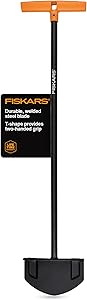
- Total Length: 38.5 inches (Long-handled)
- Blade Material: 14-gauge, hardened steel
- Handle Material: 18-gauge steel
- Key Feature: Large stepping platform
The Fiskars 38.5″ Steel Long-Handled Edger is the ideal manual tool for achieving maximum precision and clean lines around your garden beds, walkways, and driveways without the back strain associated with bending or stooping. Engineered for maximum power and precision, this edger features a hardened, sharpened blade that is specifically designed to slice cleanly through dense turf and break up tough soil effectively.
Durability is a cornerstone of the Fiskars design, ensuring the tool is long-lasting and reliable. Both the blade and the handle are constructed from robust steel: the blade is made from 14-gauge, hardened steel, and the handle is 18-gauge steel. These high-quality, welded components provide excellent durability, standing up to rigorous use year after year in various soil conditions. This commitment to quality engineering delivers lasting value, supported by the confidence of Fiskars’ warranty.
- Pros:
- Long handle eliminates the need for bending or kneeling
- Large stepping platform allows for maximum foot-driven power
- Constructed from heavy-duty, hardened steel for superior durability
- Cons:
- Requires physical effort (manual labor)
- Not suitable for clearing long stretches of unedged boundaries
3. Colwelt 59’’ Wheel Rotary Lawn Edger

- Overall Length: 59 inches
- Wheel: 3.4-inch extra-wide rubber wheel
- Blades: Alloy steel serrated blades (chrome-plated)
- Frame: Reinforced metal support bracket
The Colwelt 59’’ Wheel Rotary Lawn Edger presents an eco-conscious and efficient solution for achieving impeccably neat lawn edges without the noise, fumes, or maintenance demands of electric or gas-powered alternatives. This manual grass edger champions silent operation, allowing you to tackle yard work at any time of day without disturbing neighbors. Its design focuses on user-friendliness and effective performance, promoting a greener approach to lawn care.
Durability and cutting precision are at the core of the Colwelt rotary edger. It boasts a reinforced metal support bracket, a significant upgrade over flimsier frames, guaranteeing long-lasting sturdiness and resistance to bending under pressure. The edger is also equipped with high-quality alloy steel serrated blades, featuring a chrome-plated surface for enhanced rust resistance and durability. The serrated design, coupled with a scissor-like cutting action, allows grass to be cleanly caught and trimmed between two blades as you push, resulting in crisp, defined edges.
- Pros:
- Eco-friendly with no noise or fumes
- Extra-wide wheel for superior stability and traction
- Heavy-duty reinforced metal bracket for durability
- Cons:
- Works best on flat ground, less effective on uneven terrain
- Not ideal for shaping landscape beds
4. Truper 48-Inch Dual Wheel Rotary Edger

- Handle Material: Fiberglass
- Handle Length: 48 inches
- Wheel Design: Dual wheels
- Blade Feature: Three-position shear, self-cleaning
The Truper 48-Inch Dual Wheel Rotary Edger is crafted for gardeners seeking a straightforward and efficient tool to maintain neat lawn edges. Its fiberglass handle offers a balance of durability and lighter weight compared to steel, making it easier to maneuver during extended periods of use. The inclusion of a non-slip grip further enhances comfort and control, reducing hand fatigue and allowing for more precise operation.
What truly sets the Truper rotary edger apart is its intelligent blade design. It features a three-position shear blade, which is crucial for preventing clogging – a common frustration with many edgers, especially when dealing with damp or thick grass. This mechanism works to keep the blade clear, ensuring continuous and effective cutting performance. Additionally, the self-cleaning blade design reduces the need for frequent manual intervention, allowing you to focus on the task at hand rather than constantly clearing debris.
- Pros:
- Dual wheels provide excellent traction and stability
- Self-cleaning blade reduces clogging and maintenance
- Comfortable non-slip grip on fiberglass handle
- Cons:
- Handle length (48 inches) might be short for very tall users
- Rotary design may require a learning curve for beginners
5. Walensee 69.7″ Adjustable Wheel Rotary Edger

- Handle Material: Adjustable stainless steel
- Adjustable Heights: 40.2″, 54.7″, 69.7″
- Roller Width: 2.4 inches
- Blades: High-strength alloy steel, chrome-plated, serrated
The Walensee 69.7″ Adjustable Wheel Rotary Edger stands out for its exceptional adaptability and robust construction, making it a versatile tool for various users and landscaping needs. Its most prominent feature is the adjustable stainless steel handle, which can be effortlessly set to three distinct heights: 40.2, 54.7, or 69.7 inches. This adjustability ensures that users of virtually any height can find a comfortable working position, minimizing bending and reducing fatigue during extended periods of use.
Beyond its ergonomic handle, the Walensee edger is engineered for superior performance and stability. It features a 2.4-inch wider roller, which plays a crucial role in maintaining balance and smooth gliding along edges, even over uneven ground. This increased width helps distribute the tool’s weight more evenly, preventing it from getting stuck or tipping. The edger is equipped with high-strength alloy steel blades, boasting a chrome-plated surface for impressive durability and rust resistance.
- Pros:
- Highly adjustable handle caters to various user heights
- Enhanced stability and balance with wider roller
- Durable stainless steel handle with comfortable cushion grip
- Cons:
- Requires initial assembly upon purchase
- Might be bulky to store due to its length
6. AMES 39-Inch Saw-Tooth Border Edger

- Overall Length: 39 inches
- Blade Type: Saw-tooth 15-gauge steel
- Blade Dimensions: 8-7/8 in. W x 4-1/2 in. H
- Handle Grip: T-Grip
The AMES 39-Inch Saw-Tooth Border Edger is a classic “half-moon” style tool reimagined with modern enhancements for superior performance in creating crisp, clean lawn borders. Its robust 15-gauge steel blade is not just durable but also features a saw-tooth design, a significant upgrade that allows it to easily cut through grass and compacted earth with minimal effort. This serrated edge makes short work of tougher turf and shallow roots, providing a more efficient cutting action compared to traditional smooth blades.
Designed with user comfort and control in mind, this edger features a T-grip handle that provides a firm and comfortable hold, allowing for precise maneuverability. The 39-inch length is optimized to reduce bending and kneeling, safeguarding your back and knees during yard work. A convenient footplate is integrated just above the blade, offering a secure platform for your foot. This allows you to apply additional downward pressure using your body weight, maximizing digging power and ensuring consistent depth with each plunge.
- Pros:
- Effective saw-tooth blade cuts easily through grass and earth
- Versatile for both straight and curved edges
- Integrated footplate for comfort, control, and consistency
- Cons:
- Shorter handle (39 inches) may still require some bending for very tall users
- Requires more physical effort than wheeled or rotary edgers
7. Colwelt 38-Inch Saw-Tooth Half Moon Edger

- Overall Length: 38 inches
- Blade Type: Arched saw-tooth steel blade
- Handle Grip: T-handle with soft cushion
- Foot Platform: Extra-wide for maximum force
The Colwelt 38-Inch Saw-Tooth Half Moon Edger is designed for those who appreciate the classic half-moon style but demand enhanced performance and comfort. This manual edger excels at creating deep, clean borders along sidewalks, driveways, patios, and garden beds, making your yard lines appear impeccably neat and tidy. Its core strength lies in the steel blade, which is not only robust but features an arched saw-tooth design.
Colwelt has engineered this edger with user well-being in mind. The 38-inch long handle allows you to perform edging tasks without the discomfort of bending over or kneeling, effectively saving your back and knees from strain. The T-handle is ergonomically designed with a soft cushion grip, enhancing comfort and providing superior maneuverability for precise control over your cuts. An extra-wide foot platform is strategically placed above the blade, offering ample space and stability.
- Pros:
- Creates deep, clean borders easily and efficiently
- Effective arched saw-tooth steel blade for dense turf
- Large, extra-wide foot platform for maximum leverage
- Cons:
- Handle length (38 inches) may still be slightly short for very tall individuals
- Requires significant manual effort and body weight
How to Choose Manual Lawn Edgers
A pristine lawn isn’t just about perfectly mowed grass; it’s also about sharp, defined edges that frame your landscape and give it a professional, manicured look. While powered edgers offer speed, manual lawn edgers provide an eco-friendly, quiet, and precise alternative that grants you complete control over your yard’s aesthetics. Choosing the right manual edger, however, can be daunting with the variety of options available. This guide will walk you through everything you need to know to select the best manual lawn edger for your specific needs, ensuring your lawn always looks its absolute best.
Why Go Manual? The Benefits of Hand Edgers
Before diving into the types and features, let’s understand why many homeowners opt for manual lawn edgers over their gas or electric counterparts. The benefits are compelling:
- Eco-Friendly: No emissions, no fuel, no batteries to charge or dispose of. Manual edgers are the greenest choice.
- Quiet Operation: Enjoy the peace and quiet of your garden. No disturbing neighbors or conversations with loud motors.
- Precision and Control: Manual edgers offer unparalleled control, allowing for intricate shaping and meticulous detail that powered tools often can’t match.
- Low Maintenance: No engine to tune, no spark plugs, no air filters. Just clean the blade, and you’re good to go.
- Cost-Effective: Significantly cheaper to purchase than powered models, with no ongoing fuel or electricity costs.
- Fitness: A bit of a workout never hurt anyone! It’s a great way to stay active while maintaining your yard.
- Portability: Lighter and easier to transport without the need for power outlets or fuel cans.
Understanding the Types of Manual Lawn Edgers
Manual edgers primarily come in a few distinct designs, each with its own advantages for different edging tasks:
Half-Moon Edgers (or Step Edgers)
These are the most traditional type, resembling a shovel with a flat, half-moon-shaped blade. You use your foot to push the blade into the ground, creating a clean, vertical cut.
- Pros: Excellent for establishing new borders, cutting deep trenches, and achieving very straight lines. Durable and simple to use.
- Cons: Requires significant physical effort, especially in compacted soil or for long stretches. Can be tiring for large areas.
Rotary Edgers (or Wheel Edgers)
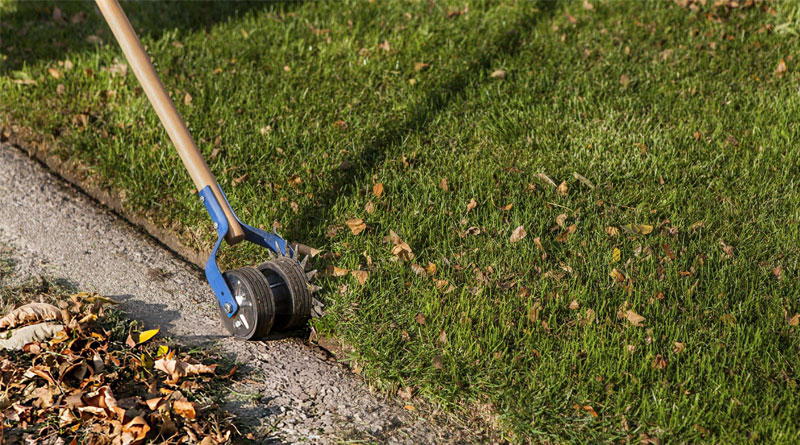
Rotary edgers feature one or two wheels and a rotating blade that cuts as you push the tool forward, much like a manual lawnmower.
- Pros: Easier to use over long distances than half-moon edgers, less physically demanding. Good for maintaining existing edges. Often self-cleaning.
- Cons: Not ideal for creating new, deep borders. Can struggle with very thick grass or roots. May require a learning curve for consistent straight lines.
Scissor Edgers
These less common types feature two blades that act like large scissors, typically on a long handle, for snipping overhanging grass.
- Pros: Excellent for very precise trimming of light grass growth overhanging edges.
- Cons: Not suitable for cutting into the soil or establishing new borders. Limited use compared to other types.
Key Features to Consider When Choosing
Once you understand the types, evaluating specific features will help you pinpoint the best manual edger for your needs:
Blade Type and Material
- Blade Shape: Half-moon blades are for deep cuts, while rotary blades are for surface trimming.
- Serrated vs. Smooth: Serrated blades (like a saw-tooth design) can cut through tougher grass and small roots more easily than smooth blades. Smooth blades offer cleaner cuts in softer turf.
- Material: Look for hardened steel (e.g., 14-gauge) for durability and sharpness. Stainless steel is good for rust resistance.
- Blade Size: A wider and taller blade on a half-moon edger allows for deeper cuts, while a larger diameter rotary blade covers more ground.
Handle Length and Grip
- Ergonomics: A long handle (typically 38-59 inches) is crucial to avoid bending and back strain. Taller individuals may prefer longer handles.
- Grip: Look for a comfortable, non-slip grip (rubberized or cushioned) on the handle to prevent blisters and improve control. T-shaped handles offer good leverage for half-moon edgers.
Footplate (for Half-Moon Edgers)
- Size and Stability: An extra-wide footplate provides a stable platform for applying downward pressure with your foot. This maximizes your force and enhances safety and control.
Wheel Design (for Rotary Edgers)
- Single vs. Dual Wheels: Dual wheels generally offer better stability and traction, making it easier to maintain a straight line.
- Wheel Width: Wider wheels contribute to greater stability and balance, especially on slightly uneven terrain.
- Material: Durable rubber or heavy-duty plastic wheels are preferred.
Construction and Durability
- Materials: Steel is generally the most durable option for blades and handles. Fiberglass handles offer a lighter alternative while maintaining strength.
- Connections: Welded constructions or multi-bolt head-handle connections indicate greater durability and less chance of loosening over time.
- Rust Resistance: Powder-coated finishes or chrome-plated blades enhance rust resistance, prolonging the tool’s lifespan.
Ease of Use and Maintenance
- Assembly: Some edgers require minor assembly. Look for tools that come with necessary hardware and clear instructions.
- Self-Cleaning Blades: Certain rotary edgers feature designs that prevent grass buildup, reducing the need for manual cleaning.
- Storage: Consider the overall size and whether it can be easily stored in your shed or garage. Some might have adjustable handles for compact storage.
Tips for Effective Manual Edging
Once you’ve chosen your edger, these tips will help you achieve the best results:
- Water the Lawn: Edging is significantly easier when the soil is slightly damp. Water your lawn an hour or two before you start.
- Mark Your Lines: For new borders or complex curves, use a garden hose or string to lay out your desired line beforehand.
- Start Slow: Don’t try to go too fast. Take your time, especially when establishing new edges, for cleaner, straighter lines.
- Overlap Cuts: Slightly overlap each cut to ensure no gaps are left behind.
- Clean Your Tool: After each use, wipe down the blade to remove dirt and sap, which prevents rust and keeps the blade sharp. Sharpen as needed.
Conclusion
A well-chosen manual lawn edger is an invaluable addition to any gardener’s toolkit. By understanding the different types—half-moon for establishing deep, crisp borders, and rotary for maintaining long, flowing edges—and carefully considering features like blade material, handle ergonomics, and overall durability, you can select a tool that perfectly aligns with your landscaping goals. Investing in the best manual lawn edger not only promises a beautifully manicured lawn but also offers the satisfaction of a job well done, quietly and sustainably.