Best Reciprocating Saw Blades For Trees of 2026
Tackling overgrown trees and stubborn branches with a reciprocating saw demands the right blade for optimal efficiency and safety. While these versatile tools are invaluable for various tasks, selecting the best reciprocating saw blades for trees specifically requires understanding key features designed for vigorous wood cutting. From precise pruning to felling small trunks, the ideal blade can significantly reduce effort, improve cut quality, and extend the life of your saw.
1. EZARC Japanese Teeth Reciprocating Saw Blade
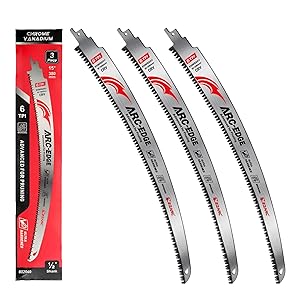
- Blade Length: 15 inches (370mm total, 320mm working)
- TPI: 6TPI (Japanese tooth profile)
- Cutting Capacity: Up to 300mm diameter (wet/dry wood, green timber, firewood)
- Tooth Design: Aggressive Japanese, triple-ground offset, fleam-ground with deep gullets
The EZARC Japanese Teeth Reciprocating Saw Blade stands out as a formidable contender for serious tree trimming and wood cutting tasks. This 3-piece set boasts an impressive 15-inch extra-long arc-edge design, specifically engineered to deliver a super-fast, coarse cut that significantly outperforms standard pruning blades. The aggressive Japanese tooth profile, combined with innovative triple-ground offset and fleam-ground teeth, provides three distinct cutting angles. This design not only reduces friction for smoother, more controlled cuts, particularly on larger branches, but also ensures efficient chip removal thanks to deep gullets.
With a 6TPI (teeth per inch) profile and a 4.1mm tooth pitch, these blades are incredibly versatile, capable of tackling a wide variety of wood types, including wet wood, dry wood, green timber, and even firewood, handling diameters up to 300mm (approximately 12 inches). The working length of 320mm offers ample reach for substantial branches. Furthermore, the universal shank ensures compatibility with most major reciprocating saw brands such as DeWalt, Bosch, Makita, and Milwaukee.
- Pros:
- Exceptional cutting speed and power
- Innovative arc edge reduces friction
- Triple-ground teeth for smooth, controlled cuts
- Cons:
- Not compatible with Ryobi saws
- Coarse cut may be less ideal for fine work
2. WORKPRO Japanese Teeth Wood Pruning Reciprocating Saw Blades

- Quantity: 5 pieces
- Blade Length: 15 inches (380mm)
- TPI: 6TPI (Japanese teeth)
- Material: Premium chromium-vanadium steel (CRV)
The WORKPRO 15″ Japanese Teeth Wood Pruning Reciprocating Saw Blades Set offers an excellent value proposition for those frequently engaged in tree pruning and wood cutting. This generous 5-pack of 15-inch (380mm) blades is specifically designed with a 6TPI Japanese tooth configuration, making them perfectly suited for tackling a variety of materials including branches, wet wood, firewood, and logs up to 300mm in diameter. The premium chromium-vanadium (CRV) steel construction is a significant highlight. This robust material allows the blades to withstand high-intensity cutting tasks.
A key feature of these blades is their innovative arc edge design. This unique curved shape is engineered to provide a remarkably smooth and controlled cutting experience. It actively works to prevent binding, significantly reduces cutting resistance, and minimizes blade deflection, all contributing to enhanced cutting efficiency. Whether you’re performing delicate pruning or powering through thick sections of wood, the arc edge ensures clean and consistent cuts.
- Pros:
- Excellent value with a 5-pack
- Durable CRV steel construction
- Arc edge design prevents binding
- Cons:
- 15-inch length can be unwieldy for smaller jobs
- Coarse TPI may leave rougher cuts
3. HORUSDY Wood Pruning Reciprocating Saw Blades

- Quantity: 5 pieces
- Blade Length: 12 inches
- TPI: 5TPI
- Material: HCS (High Carbon Steel)
The HORUSDY 12-Inch Wood Pruning Reciprocating Saw Blades come in a convenient 5-pack. Crafted from HCS (High-speed Carbon Steel), these blades are engineered for faster cutting in wood and enhanced durability compared to standard blades. The 5TPI (teeth per inch) configuration is well-suited for rough, fast cuts, making them an ideal choice for quickly clearing branches, managing overgrown bushes, or breaking down firewood. The design prioritizes efficiency, aiming to deliver smoother cuts even in challenging conditions, which is crucial for maintaining productivity during outdoor projects. Their construction leverages advanced alloys and tooth designs.
Compatibility is a strong point for HORUSDY, as these blades are designed to work seamlessly with all major reciprocating saw brands, including popular models from Porter & Cable. This broad compatibility ensures that most users can integrate these blades into their existing tool collection without issue. An added bonus is the inclusion of a durable, clear plastic storage box. This thoughtful accessory helps keep your blades organized and protected. For those seeking a reliable, budget-friendly set of blades for general wood pruning and rough cutting, the HORUSDY 12-inch blades provide a practical and efficient solution.
- Pros:
- Good value with a 5-pack
- Fast cutting in wood
- Broad compatibility with major saw brands
- Cons:
- 5TPI is a rough cut, not for fine work
- HCS may not last as long as carbide for heavy use
4. Diablo Demo Demon Carbide Tipped Reciprocating Saw Blades

- Quantity: 3-pack
- Blade Length: 9 inches
- TPI: 3 TPI (Carbide Tooth Geometry)
- Coating: Perma-SHIELD Non-Stick Coating
The Diablo Demo Demon Carbide Tipped Reciprocating Saw Blades are true “game-changers” for pruning and clean wood cutting, setting a new standard for durability and performance. This 3-pack of 9-inch blades features an aggressive carbide tooth geometry, meticulously designed to deliver an unmatched 50X longer cutting life compared to standard blades, along with significantly faster cuts and increased productivity. Diablo’s unique TiCo Hi-Density Carbide is manufactured in-house, ensuring maximum durability and superior performance across the toughest wood cutting applications. The oversized blade body provides exceptional strength.
Beyond the robust carbide teeth, these industry-first blades incorporate large gullets for fast chip removal, preventing clogging and maintaining consistent cutting speed in extreme conditions. A standout feature is the Perma-SHIELD non-stick coating, which effectively prevents gumming and friction. This results in incredibly fast and effortless cuts, even in the stickiest, toughest wood scenarios that would typically bog down other blades.
- Pros:
- Exceptional 50X longer cutting life
- Aggressive carbide teeth for fast cuts
- Perma-SHIELD coating prevents gumming
- Cons:
- Higher initial cost
- 9-inch length might be short for very large trunks
5. ANGELSWORD Arc Edge Reciprocating Saw Blade
- Quantity: 3-pack
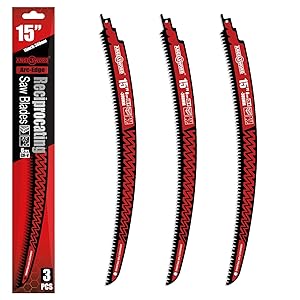
- Blade Length: 15 inches
- TPI: 6TPI
- Material: Premium chromium-vanadium (CR-V) steel
The ANGELSWORD 15 Inch Arc Edge Reciprocating Saw Blade set offers a durable and efficient solution for various tree trimming and wood cutting tasks. This 3-pack is constructed from premium chromium-vanadium (CR-V) steel, a material renowned for its exceptional durability and strength, ensuring these blades can withstand the rigors of heavy-duty use. The significant 15-inch length, combined with a 6TPI (teeth per inch) profile, makes them particularly effective for handling branches, wet wood, firewood, and logs up to 12 inches (305mm) in diameter. This versatility positions them as a go-to choice for general yard maintenance and more demanding wood processing projects.
A key design element is the innovative arc edge, which plays a crucial role in enhancing cutting efficiency. This unique curved shape is engineered to effectively prevent binding, reduce cutting resistance, and minimize blade deflection, all contributing to a smoother and more controlled cutting experience. Furthermore, the blades feature a triple-ground offset tooth design. This advanced tooth configuration is instrumental in reducing clogging, improving overall cutting efficiency, and extending the lifespan of the blades.
- Pros:
- Durable CR-V steel construction
- Arc edge design reduces binding and deflection
- Triple-ground teeth improve cutting efficiencys
- Cons:
- 15-inch length can be challenging in tight spots
- Some buyers might receive older blade versions
6. KEENTECH Cr-V Reciprocating Saw Blade

- Quantity: 5-pack
- Blade Length: 9 inches
- TPI: 5 TPI (Fleam Ground Teeth)
- Material: Cr-V (Chrome-Vanadium) Steel
The KEENTECH 9 Inch Cr-V Reciprocating Saw Blade 5-Pack offers a robust and versatile solution for wood cutting and tree pruning. These blades are specifically engineered for tackling tree branches, limbs, roots, or green lumbers with a diameter under 7.5 inches, making them ideal for a variety of garden and yard maintenance tasks. A standout feature is their construction from Cr-V (Chrome-Vanadium) steel, which significantly surpasses HCS (High-Carbon Steel) in terms of toughness, fatigue strength, hot hardness, and crucial rust resistance. This premium material ensures the blades can endure outdoor heavy use.
Further enhancing their durability and performance, these KEENTECH blades undergo a high-frequency heat treatment, resulting in a distinct blackened outlook. This process hardens the teeth to an impressive HRC 60±2, guaranteeing exceptional wear resistance and at least a 3 times longer lifespan compared to untreated blades. The fleam-ground teeth with deep gullets are designed to bite deep into the wood, efficiently cutting fibers and removing chips without binding, which translates to faster and more efficient cuts.
- Pros:
- Superior Cr-V steel for enhanced durability
- High-frequency heat treatment for extended lifespan
- Fleam-ground teeth for fast, efficient cutting
- Cons:
- 9-inch length is limited for very thick logs
- 5 TPI is a coarse cut, not for fine detail work
7. TOLESA Japanese Teeth Reciprocating Saw Blade
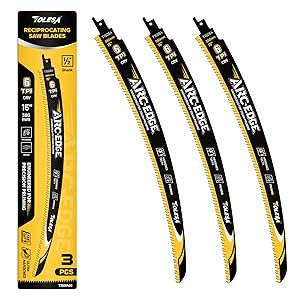
- Quantity: 3-piece set
- Blade Length: 15 inches (380mm)
- TPI: 6 TPI
- Material: Premium chromium-vanadium (CR-V) steel
The TOLESA 15in. Japanese Teeth Reciprocating Saw Blade set offers a robust and efficient solution for demanding wood-cutting and pruning tasks. This 3-piece Arc-Edge set features blades with a generous 15-inch (380 mm) total length and a 1.2 mm thickness, making them highly capable for tackling substantial branches and logs. Crafted from premium chromium-vanadium (CR-V) steel, these blades are built for exceptional durability and strength, ensuring reliable performance in the most demanding wood-cutting scenarios. The 6 TPI (teeth per inch) configuration is specifically designed for aggressive, fast cuts, making them ideal for branch trimming, firewood cutting, and general log processing.
A significant advantage of these TOLESA blades is their uniquely curved Arc Edge design. This innovative shape provides not only exceptional durability but also a smooth and highly efficient cutting experience. The curved edge is particularly beneficial for improved reach and ease of use, especially when working in tight or overhead spaces, allowing for precise and controlled cuts. Furthermore, the blades incorporate a triple-ground offset tooth design, which is highly effective in reducing clogging and significantly improving cutting efficiency. This advanced tooth geometry not only ensures smoother operation but also extends the overall lifespan of the blades, providing excellent value over time. For fast, efficient, and durable performance in outdoor pruning and wood-cutting applications, these TOLESA blades are a commendable choice.
- Pros:
- Durable CR-V steel construction
- Arc Edge design for improved reach and control
- Triple-ground teeth enhance cutting efficiency
- Cons:
- 6 TPI is a coarser cut, not for fine detail
- 15-inch length can be cumbersome in very confined areas
How to Choose Reciprocating Saw Blades For Trees
Reciprocating saws are incredibly versatile power tools, often affectionately called “Sawzalls” after Milwaukee’s popular brand. While they are renowned for demolition and rough cutting, their potential for tree pruning and wood cutting is often underestimated. However, merely owning a reciprocating saw isn’t enough; equipping it with the right blade is paramount, especially when tackling nature’s toughest challenge: wood. Choosing the best reciprocating saw blades for trees can transform a laborious chore into an efficient and satisfying task. This comprehensive guide will walk you through the critical factors to consider, ensuring you make an informed decision for your arboricultural needs.
Why Blade Choice Matters for Tree Work
The effectiveness of your reciprocating saw for tree cutting hinges almost entirely on the blade you select. Using the wrong blade can lead to slow, frustrating cuts, excessive vibration, premature blade wear, and even potential safety hazards. A blade specifically designed for wood or pruning will offer superior speed, efficiency, and cleanliness of cut, making your work easier and yielding better results for the health of your trees. Understanding the nuances of blade design, material, and specifications is key to unlocking your saw’s full potential.
Understanding Blade Materials and Durability
The material from which a blade is constructed directly impacts its lifespan and performance, especially when cutting through fibrous wood.
High Carbon Steel (HCS)
HCS blades are typically the most common and affordable option. They are relatively flexible and excel at cutting wood, plastics, and softer materials. For occasional light pruning or cutting green wood, HCS blades offer good performance. However, they tend to wear out faster when encountering harder woods or prolonged use, and their teeth can dull quickly. They are a good starting point for homeowners with light to moderate tree maintenance needs.
Bi-Metal Blades
Bi-metal blades represent a significant upgrade from HCS. They combine a flexible HCS body with high-speed steel (HSS) teeth, which are fused together using advanced laser welding. This hybrid construction provides the best of both worlds: the flexibility of HCS to resist breaking and the durability of HSS to maintain sharper teeth for longer. Bi-metal blades are excellent for cutting wood with nails, making them versatile for demolition involving wood. While they last longer than HCS, they are also more expensive. For tougher, more frequent pruning, bi-metal offers a good balance of performance and durability.
Carbide-Tipped Blades
At the top tier for durability and aggressive cutting are carbide-tipped blades. These blades feature extremely hard carbide inserts brazed onto the teeth. Carbide is significantly more resistant to heat and abrasion than HSS, making these blades exceptionally long-lasting, often outperforming bi-metal blades by a factor of 10 or more. They are ideal for cutting through very hard wood, wood with embedded metal, and for heavy-duty, prolonged pruning applications where other blades would quickly fail. While they come with a higher price tag, their extended lifespan and superior performance often justify the investment for professionals or those with extensive tree work.
The Importance of Teeth Per Inch (TPI)
TPI, or teeth per inch, is a crucial specification that dictates the speed and finish of your cut. Generally, fewer TPI means faster, rougher cuts, while more TPI means slower, smoother cuts.
Low TPI for Trees (3-6 TPI)
For tree cutting and pruning, you’ll almost always want a blade with a low TPI, typically ranging from 3 to 6. These coarse teeth are designed to aggressively rip through wood fibers, quickly clearing chips and minimizing binding. A low TPI blade is perfect for cutting green wood, branches, logs, and general rough-cutting tasks. The wider gullets (the spaces between teeth) prevent sap and sawdust from clogging the blade, maintaining cutting efficiency. Don’t use a high TPI blade for wood; it will clog, overheat, and struggle significantly.
Blade Length and Width
Blade length directly impacts your cutting capacity and reach, while width affects stability.
Length for Reach and Capacity
For tree pruning, longer blades are generally better. Common lengths for wood-cutting blades range from 9 inches to 12 inches, with some specialized pruning blades extending to 15 or even 18 inches. A longer blade allows you to cut through thicker branches in a single pass and provides better reach for limbs that are harder to access. Ensure your blade is long enough to extend beyond the material you’re cutting throughout the entire stroke of the saw.
Width for Stability
Wider blades (typically 3/4 inch to 1 inch) offer increased stability and rigidity, which is beneficial when cutting through thick, stubborn branches. They are less prone to bending or flexing, leading to straighter, more controlled cuts, especially on larger diameters.
Tooth Design and Geometry
Beyond TPI, the specific design of the teeth plays a significant role in cutting performance.
Japanese Teeth
Japanese tooth designs, often seen on longer pruning blades, feature aggressive, triple-ground teeth that cut on the pull stroke (and sometimes on both push and pull). This design is highly efficient for fast, clean cuts in green wood and branches, mimicking traditional hand saws. They often have deep gullets to prevent clogging from sap and sawdust.
Fleam Ground Teeth
Fleam ground teeth are sharpened on both sides, creating a very aggressive, razor-sharp edge. Combined with deep gullets, this design allows for extremely fast material removal and efficient cutting through thick wood, wet or dry. Many dedicated pruning blades incorporate fleam grinding.
Arc Edge Design
Some newer pruning blades feature an “arc edge” or curved profile. This design is engineered to reduce friction and minimize binding, particularly when cutting through larger diameter branches. The arc helps the blade glide through the wood more smoothly, improving cutting efficiency and control.
Shank Type and Compatibility
Most reciprocating saw blades feature a universal 1/2-inch tang (shank), which makes them compatible with nearly all major brands, including Milwaukee (Sawzall), DeWalt, Bosch, Makita, Porter-Cable, and others. Always double-check the product specifications to ensure compatibility with your specific saw model, although it’s rarely an issue for general-purpose blades.
Additional Features to Consider
Non-Stick Coatings
Some blades come with a non-stick coating (e.g., PTFE or Perma-SHIELD). This coating reduces friction, preventing sap and resin from building up on the blade, which can otherwise slow down cutting and lead to premature dulling. For cutting green, sappy wood, a non-stick coating is a valuable asset.
Blade Sets and Storage
Often, blades are sold in multi-packs, providing better value. Look for sets that include a durable storage case, which helps protect the blades from damage and keeps them organized, prolonging their life and ensuring they’re ready when you need them.
Safety First: Operating Your Reciprocating Saw for Trees
Regardless of how good your blade is, safety must always be your top priority when cutting trees. Always wear appropriate personal protective equipment (PPE), including safety glasses, gloves, and hearing protection. Ensure stable footing, and never cut overhead without proper ladder stability or professional assistance. Be aware of kickback, especially when plunging into wood or encountering knots. Plan your cuts to avoid pinching the blade and never force the saw; let the blade do the work.
Maintenance for Longevity
To maximize the life of your tree-cutting blades:
- Clean blades regularly: Remove sap and sawdust buildup using a wire brush and a solvent (like denatured alcohol or blade cleaner) after each use.
- Store properly: Keep blades in their original packaging or a dedicated blade case to prevent dulling or damage.
- Inspect before use: Check for bent teeth, cracks, or excessive wear. A dull blade is inefficient and unsafe.
Conclusion
Choosing the best reciprocating saw blades for trees is a critical step in effective and safe tree maintenance. By understanding the different blade materials, TPIs, lengths, and tooth designs, you can select blades that are perfectly suited for the specific types of wood and tasks you’ll be undertaking. Investing in quality blades not only enhances your cutting performance but also improves efficiency, reduces strain on your saw, and ensures a safer, more productive experience. Arm your reciprocating saw with the right blades, and you’ll be well-equipped to tackle any arboreal challenge your yard presents.