Best Gas Powered Log Splitters of 2026
Gas log splitters offer unparalleled power and portability, making them ideal for processing large volumes of wood in remote locations without the need for an electrical outlet. This guide dives into the top gas-powered models available, highlighting their features, performance, and what makes each a standout choice for homeowners and professionals alike, ensuring you find the perfect machine to meet your splitting needs.
1. Champion Power Equipment 27-Ton Gas Log Splitter

- Splitting Force: 27 tons
- Engine: 224cc Champion OHV
- Cycle Time: 16 seconds
- Tow Speed: Up to 45 mph
The Champion Power Equipment 27-Ton Gas Log Splitter stands out as a robust and highly versatile machine designed to handle demanding wood-splitting tasks with ease. Powered by a potent 224cc Champion single-cylinder OHV engine, this splitter delivers an impressive 27 tons of splitting capacity. Its dual horizontal/vertical operating positions are a game-changer; you can quickly switch modes to process smaller logs at waist height or easily manage large, heavy logs by rolling them onto the vertical beam. This adaptability makes it suitable for a wide range of log sizes and user preferences.
Efficiency is a cornerstone of this Champion model, boasting a rapid 16-second cycle time, complemented by an expanded operator area for comfortable and safe operation. The dependable auto-return valve further enhances productivity, allowing for over 220 splitting cycles per hour, meaning you can process massive amounts of firewood in a short timeframe. Portability is also a key advantage, as it’s towable up to 45 mph, featuring an extended tongue, a 2-inch ball hitch coupler, and 16-inch tires, making it perfectly suited for ATV/UTV applications and easy transport to various job sites.
- Pros:
- High 27-ton splitting force
- Versatile horizontal/vertical operation
- Fast 16-second cycle time
- Cons:
- Gasoline operation requires fuel storage
- Requires engine maintenance
2. BILT HARD 20-Ton Gas Log Splitter
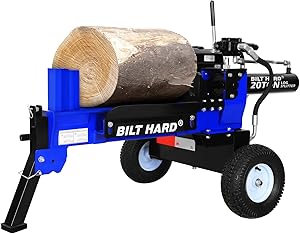
- Splitting Force: 20 tons
- Engine: 7 HP 209cc OHV
- Cycle Time: 7 seconds
- Tow Speed: Up to 25 MPH
The BILT HARD 20-Ton Gas Log Splitter offers a compelling blend of power and efficiency, making it an excellent choice for homeowners needing to process a significant amount of firewood quickly. Driven by a robust 7 HP 209cc single-cylinder OHV engine, this machine delivers a potent 20 tons of splitting force, allowing it to handle logs with speed and precision. Its ability to generate 12.4 ft.-lb. of torque ensures consistent performance, making light work of various wood types. The streamlined design focuses on performance.
One of the standout features of this hydraulic wood splitter is its impressive 7-second cycle time, which significantly boosts productivity, allowing you to complete your splitting projects in a fraction of the time compared to less efficient models. Coupled with a heavy-duty hydraulic system that operates at 14 GPM, it’s designed for sustained performance while keeping contaminants out and extending the system’s life.
- Pros:
- Strong 20-ton splitting capacity
- Very fast 7-second cycle time
- Towable for easy transport
- Cons:
- Lower towing speed compared to some models
- Only horizontal splitting mode
3. SuperHandy 20-Ton Gas Log Splitter

- Splitting Force: 20 tons
- Engine: AlphaWorks 7HP 4-stroke OHV
- Cycle Time: 7.5 seconds
- Max Log Size: 20″ L x 16″ Dia
The SuperHandy 20-Ton Gas Log Splitter is a powerful and efficient solution for those needing to process firewood quickly and reliably. Driven by an AlphaWorks 7HP 4-stroke OHV gas engine, it delivers a robust 20 tons of splitting force, capable of tackling logs up to 20 inches in length and 16 inches in diameter with remarkable ease. This machine is equipped with an ultra-reliable 2-Stage Bucher Hydraulic Gear Pump. Its design prioritizes smooth operation, providing a linear power curve that avoids cumbersome performance.
Portability is a key highlight of this SuperHandy model. Weighing in at 130lbs, its lightweight horizontal full-beam, steel-wedge design, combined with sturdy 10-inch tubeless polyurethane wheels and an ergonomic folding handle, allows for smooth maneuvering and easy transportation from one worksite to another. Efficiency is further enhanced by its impressive 7.5-second cycle time, allowing for rapid splitting and consistent force that slices through wood piles confidently.
- Pros:
- Strong 20-ton splitting capacity
- Fast 7.5-second cycle time
- Highly portable with sturdy wheels
- Cons:
- Hydraulic fluid sold separately
- Only horizontal splitting mode
4. BILT HARD 30-Ton Horizontal/Vertical Gas Log Splitter

- Splitting Force: 30 tons
- Engine: 7.5 HP 223cc OHV
- Cycle Time: 11 seconds
- Max Log Length: 24 inches
The BILT HARD Full Beam 30-Ton Gas Powered Hydraulic Log Splitter is a robust and highly efficient machine designed for serious firewood processing. With its powerful 7.5 HP 223cc single-cylinder OHV engine, it generates an impressive 30 tons of splitting force, allowing it to quickly and effortlessly process hardwood logs. This substantial power means even the toughest, knotted wood can be handled with minimal effort, significantly speeding up your splitting tasks. Its durable 8-inch hardened steel splitting wedge ensures effective and clean splits, contributing to overall efficiency and a high volume output.
A key innovation of this BILT HARD splitter is its versatile dual-position design, allowing users to switch effortlessly between horizontal and vertical splitting modes in mere seconds. This adaptability is crucial for handling logs of varying sizes and weights, reducing operator strain when managing larger, heavier pieces. High-speed splitting efficiency is guaranteed with an 11-second cycle time for logs up to 24 inches in length, ensuring continuous high-volume operation. The heavy-duty hydraulic system boasts a 6-gallon capacity and operates at 14 GPM, designed to prevent contaminants and extend system life.
- Pros:
- Exceptional 30-ton splitting capacity
- Dual horizontal/vertical operation
- Fast 11-second cycle time for large logs
- Cons:
- Larger footprint due to full beam design
- Gas engine requires fuel and maintenance
5. SuperHandy 20-Ton Portable Gas Log Splitter

- Splitting Force: 20 tons
- Engine: 7HP Gas Engine
- Cycle Time: 7.5 seconds
- Max Log Size: 20″ L x 16″ Dia
The SuperHandy 20-Ton Portable Gas Log Splitter is engineered for efficiency and convenience, making it an excellent choice for those who need a reliable machine on the go. Powered by a heavy-duty 7HP gas engine, this splitter utilizes a highly dependable 2-Stage Bucher Hydraulic Gear Pump to deliver a robust 20 tons of splitting force. This impressive power allows it to easily split logs up to 20 inches in length and 16 inches in diameter, tackling a variety of wood sizes with consistent force. The integrated Rapid Auto Return Ram System further enhances its performance, ensuring quick resetting between splits and boosting overall productivity.
Designed with portability in mind, this horizontal full beam, steel-wedge log splitter features sturdy 10-inch transport wheels and a lightweight construction of 130 lbs, allowing for smooth maneuvering and easy setup wherever your work takes you. Its efficiency is notable, with a rapid 7.5-second cycle time that enables you to effortlessly complete large splitting jobs in a short period. The gas-powered engine provides a consistent linear power curve.
- Pros:
- Strong 20-ton splitting capacity
- Fast 7.5-second cycle time with auto-return
- Excellent portability with sturdy wheels
- Cons:
- Hydraulic fluid sold separately
- Only horizontal splitting mode
6. BILT HARD 35 Ton Gas Log Splitter with Hydraulic Log Lift

- Splitting Force: 35 tons
- Engine: 10 HP 306cc 4-stroke
- Cycle Time: 15 seconds
- Wedge Options: 4-way & 6-way
The BILT HARD 35 Ton Gas Log Splitter is a heavy-duty powerhouse, engineered for serious wood processing tasks, especially for large volumes and challenging logs. It boasts a high-performance 10 HP, 306cc engine that delivers an impressive 35 tons of splitting power, making it one of the strongest options available. This formidable force, coupled with a 13.6 ft-lb torque at 3,000 RPM, ensures that even the toughest, most knotted hardwoods are split with exceptional ease and efficiency. The robust box-shape beam design further enhances its durability, providing superior strength and stability that withstands the stresses of heavy-duty operation, unlike traditional I-beams.
This splitter distinguishes itself with an advanced hydraulic system, featuring a powerful 18 GPM Bucher 2-stage pump that contributes to a fast 15-second cycle time for rapid, continuous splitting. A major convenience factor is the integrated hydraulic log lift and wedge adjustment, capable of handling logs up to 700 lbs with a 5-inch lifting stroke, significantly minimizing manual labor and maximizing safety. Versatility is also paramount, with interchangeable 4-way and 6-way wedges, alongside a 12-inch wedge that processes logs up to 24 inches long and 20 inches in diameter.
- Pros:
- Exceptional 35-ton splitting force
- Integrated hydraulic log lift for heavy logs
- Includes interchangeable 4-way and 6-way wedges
- Cons:
- Higher price point due to advanced features
- Larger and heavier unit
7. Landworks 20-Ton Portable Gas Log Splitter
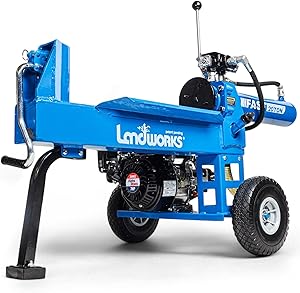
- Splitting Force: 20 tons
- Engine: 7HP Gas Engine
- Cycle Time: 7.5 seconds
- Max Log Size: 20″ L x 16″ Dia
The Landworks 20-Ton Portable Gas Log Splitter is built for reliable and efficient firewood processing, offering a robust solution for homeowners and professionals alike. At its core is a heavy-duty 7HP gas engine, which powers a 20-ton rated system utilizing the highly reliable 2-Stage Bucher Hydraulic Gear Pump. This combination ensures substantial splitting force, making it capable of effortlessly handling logs up to 20 inches in length and 16 inches in diameter. The inclusion of a Rapid Auto Return system further enhances its operational smoothness and speed, minimizing downtime between splits and maximizing your productivity.
Designed with user convenience and mobility in mind, this log splitter features a lightweight horizontal full beam and steel wedge design, weighing approximately 130 lbs. It comes equipped with sturdy 10-inch transport wheels, allowing for easy maneuvering and hassle-free transportation across various terrains. The 7HP gas engine provides a consistent linear power curve. With an impressive 7.5-second cycle time, this machine enables you to complete large splitting jobs swiftly and with confidence, all without the constraint of needing an electrical power source.
- Pros:
- Strong 20-ton splitting capacity
- Rapid 7.5-second cycle time
- Highly portable and easy to move
- Cons:
- Hydraulic fluid sold separately
- Only horizontal splitting mode
How to Choose Gas Powered Log Splitters
For anyone who regularly deals with firewood, whether for heating their home, maintaining a property, or preparing for outdoor activities, a gas-powered log splitter is an invaluable investment. These powerful machines significantly reduce the strenuous effort and time involved in manually splitting wood, making the task safer, faster, and more efficient. But with a plethora of options on the market, choosing the “best” one can feel overwhelming. This comprehensive guide will walk you through the essential factors to consider, helping you select a gas log splitter that perfectly matches your needs, budget, and property.
Why Choose a Gas-Powered Log Splitter?
Gas-powered log splitters offer several distinct advantages that make them the preferred choice for many users, especially those dealing with large volumes of wood or working in remote locations:
Mobility
One of the primary benefits is their independence from electrical outlets. Unlike electric splitters, gas models can be used virtually anywhere—deep in the woods, at a remote cabin, or in a large backyard far from power sources. Many come with towable hitches and tires, allowing for easy transportation behind an ATV, UTV, or even a vehicle.
Power
Gas engines typically provide significantly more splitting force (tonnage) compared to their electric counterparts. This means they can tackle larger, denser, and gnarlier logs with greater ease, reducing the chance of jams and making short work of challenging timber.
Speed
With powerful engines and efficient hydraulic systems, gas log splitters often boast faster cycle times. This increased speed translates to higher productivity, allowing you to process more wood in less time, which is crucial for large firewood stacks.
Key Factors to Consider When Buying
To ensure you make an informed decision, evaluate these critical specifications and features:
Tonnage Rating: What Does It Mean?
The tonnage rating indicates the amount of force the splitter can exert. This is arguably the most crucial factor. A higher tonnage rating means the splitter can handle tougher, larger, and denser logs. Here’s a general guideline:
- 10-20 Tons: Suitable for small to medium-sized logs, softwoods, and seasoned hardwoods. Ideal for occasional use or smaller properties.
- 20-27 Tons: A good all-around range for most homeowners, capable of handling most seasoned and some unseasoned hardwoods.
- 28-35+ Tons: Best for large, dense, unseasoned, or knotted hardwoods. Essential for heavy-duty, commercial, or professional use.
Consider the type and size of wood you’ll primarily be splitting. It’s often better to err on the side of slightly more power than you think you’ll need.
Engine Power (HP/CC): Impact on Performance
The engine’s horsepower (HP) or cubic centimeters (CC) directly correlates with the splitter’s hydraulic pump efficiency and overall power. A more powerful engine will typically deliver faster cycle times and better performance under heavy loads. Common ranges include 5 HP to 10 HP (or 160cc to 300cc+).
Cycle Time: Efficiency in Action
Cycle time is the duration it takes for the ram to extend, split the log, and fully retract. Faster cycle times (e.g., 7-15 seconds) mean you can split more logs per hour, significantly boosting your productivity. Look for models with an auto-return valve, which automatically retracts the ram, allowing you to prepare the next log while the ram returns.
Horizontal vs. Vertical Operation: Versatility for Large Logs
Many gas log splitters offer dual horizontal/vertical operation. This versatility is a major benefit:
- Horizontal: Standard operation for most logs, especially smaller to medium ones that are easier to lift onto the beam.
- Vertical: Allows you to roll heavy, large logs directly onto the splitting wedge without lifting them, saving immense physical effort and preventing back strain. This feature is particularly valuable for processing logs that are too heavy to lift.
Portability and Towing: For Different Needs
If you need to move your splitter between different locations, portability is key. Look for features like:
- Towable Hitch: A 2-inch ball coupler and DOT-approved tires for road towing at higher speeds (up to 45 mph) is ideal for larger properties or commercial use.
- Smaller Wheels/Handles: For more compact models, sturdy pneumatic tires and ergonomic handles facilitate manual maneuvering around a yard or property.
- Weight: Lighter models are easier to move manually, but often sacrifice some power or features.
Wedge Type: Single, 4-Way, or 6-Way
Most splitters come standard with a single wedge. However, some models offer or can be upgraded with multi-way wedges (4-way or 6-way splitters). These wedges split logs into multiple pieces with a single pass, drastically increasing efficiency for firewood production. Consider these if you need to process large quantities quickly.
Log Capacity (Length/Diameter): Match to Your Wood Size
Check the maximum log length and diameter the splitter can accommodate. Most residential models handle logs up to 20-24 inches long. Ensure this matches the size of logs you typically work with to avoid frustration and potential damage to the machine.
Hydraulic System: Pump Type, Reservoir Size
The quality and capacity of the hydraulic system are crucial for consistent performance. A 2-stage hydraulic pump is standard on most good gas splitters, providing fast ram extension for light loads and automatically switching to high pressure for tougher splits. A larger hydraulic fluid reservoir helps dissipate heat and ensures a longer life for the fluid and pump.
Safety Features: Essential for Operation
Always prioritize safety. Look for:
- Two-Handed Operation: Requires both hands to operate, keeping them away from the splitting wedge.
- Emergency Shut-Off: Easily accessible button or lever to stop the engine quickly.
- Log Cradles: Help hold logs securely in place, preventing them from falling during splitting.
- Safety Chains: Essential for safe towing.
Durability and Build Quality: Longevity of Your Investment
A log splitter is a significant investment, so look for heavy-duty steel construction, reinforced beams (like box-beam designs), and high-quality components. Robust construction ensures the machine can withstand the rigors of heavy use and various weather conditions, extending its lifespan.
Brand Reputation and Support: Warranty, Parts, and Service
Choose a reputable brand known for producing durable equipment and providing excellent customer support. Check the warranty period and availability of replacement parts and service centers. A good warranty (e.g., 2-5 years) can offer peace of mind.
Maintenance Tips for Gas Log Splitters
Proper maintenance is crucial for the longevity and optimal performance of your gas log splitter. Here are some key tips:
Engine Maintenance
- Oil Changes: Follow the manufacturer’s recommendations for regular oil changes (e.g., after the first 5 hours, then every 25-50 hours).
- Air Filter: Clean or replace the air filter regularly, especially when working in dusty conditions.
- Spark Plug: Inspect and replace the spark plug periodically.
- Fuel: Use fresh, high-quality gasoline and consider a fuel stabilizer if storing the splitter for extended periods. Drain fuel if storing for a very long time.
Hydraulic System
- Hydraulic Fluid: Check the hydraulic fluid level before each use and top it off as needed. Replace the fluid according to the manufacturer’s schedule (e.g., annually or every 100 operating hours). Use the correct type of hydraulic fluid specified in your manual.
- Filter: Some models have a hydraulic filter; replace it as recommended to keep the system clean.
- Hoses and Fittings: Inspect hydraulic hoses and fittings for leaks, cracks, or damage. Tighten any loose fittings.
Cleaning and Storage
- Clean Regularly: After each use, clear sawdust, wood chips, and debris from the machine, especially around the engine and hydraulic components.
- Lubrication: Lubricate any moving parts as recommended by the manufacturer.
- Storage: Store the splitter in a dry, covered area to protect it from the elements. If storing outdoors, use a weather-resistant cover.
Conclusion
Choosing the best gas-powered log splitter is about matching the machine’s capabilities to your specific needs. By carefully considering factors like tonnage, engine power, cycle time, operational versatility, and portability, you can find a robust and efficient model that transforms your firewood processing into a manageable and even enjoyable task. Investing in a high-quality splitter not only saves you time and physical effort but also ensures you have a reliable tool for years to come. Always remember to prioritize safety during operation and adhere to a regular maintenance schedule to keep your log splitter in top condition.