Best Grow Lights For Succulents of 2026
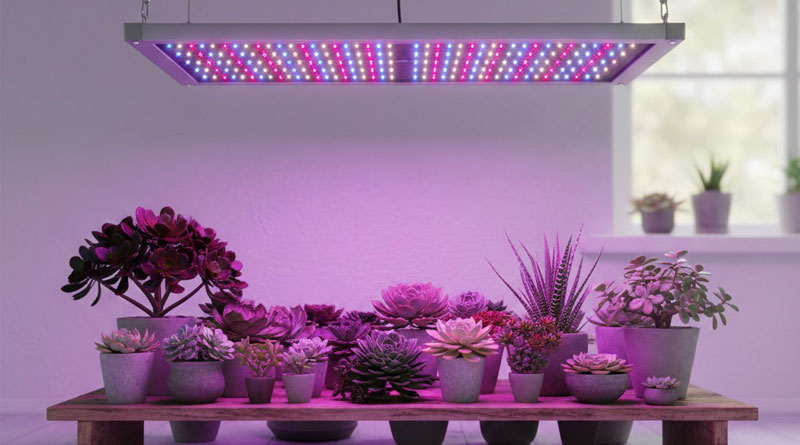
This comprehensive guide reviews the best grow lights specifically tailored for succulents, offering solutions that range from compact clip-ons to versatile stand lights, ensuring your beloved plants receive the optimal spectrum and intensity they need to thrive, even in the darkest corners of your home or office. Let’s illuminate their path to glorious growth.
1. SANSI Pot Clip LED Grow Light for Succulents
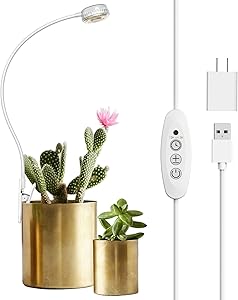
- Power Output: 5W (35.78 μmol/s/㎡ @6 inches)
- Spectrum: Full Spectrum 4000K Natural Light
- Timer Settings: 3/6/12 Hours Auto On/Off
- Dimming Levels: 4 (25%, 50%, 75%, 100%)
The SANSI Pot Clip LED Grow Light stands out for its compact yet powerful design, specifically engineered with SANSI’s unique ceramic technology for efficient power conversion. Despite its small size, this 5W light delivers significant growing power, saving energy while boosting plant growth by an impressive 25% compared to similar 10W lights. Its 4000K natural light spectrum is not only optimal for a wide variety of indoor potted plants like succulents, aloe vera, and African violets, but it’s also easy on the eyes.
Equipped with a flexible gooseneck and sturdy clamp, installation is incredibly simple, allowing you to direct the light precisely where your succulents need it most. The user-friendly features extend to its built-in timer, offering 3, 6, or 12-hour auto on/off cycles, and four dimming levels, providing customizable light intensity for different growth stages. Powering it is convenient with a low 5V input, compatible with power banks, laptops, or computers.
- Pros:
- Energy-efficient with ceramic technology
- Pleasant 4000K natural light
- Flexible gooseneck and easy installation
- Cons:
- Best suited for small, individual potted plants
- Output might be insufficient for larger collections
2. GooingTop 6000K Full Spectrum Clip Grow Light

- Color Temperature: 6000K Full Spectrum
- LED Configuration: 10 Red + 74 White LEDs
- Timer Function: 4/8/12 Hours Auto On/Off
- Dimming Levels: 5
The GooingTop LED Grow Light offers a fantastic solution for indoor succulents, delivering a 6000K full-spectrum white light that closely mimics natural midday sunlight. This professional design, incorporating 10 red and 74 white LEDs, ensures your plants receive the essential wavelengths for robust growth and vibrant coloration. Beyond its horticultural benefits, the high color rendering index (CRI) of 95 produces a soft, flicker-free light.. Its versatility makes it ideal for various small house plants.
Ease of use is a key advantage of this grow light, featuring a flexible gooseneck and a strong clamp that allows for effortless placement and angle adjustment to provide optimal illumination for your succulents. The integrated timer function offers convenient automation with 4, 8, or 12-hour settings on a 24-hour cycle, ensuring your plants receive consistent lighting even when you’re away. With an impressively low power draw of approximately 10W, it’s highly energy-efficient, costing roughly $2 per month for 12 hours of daily use.
- Pros:
- Simulates natural midday sunlight (6000K)
- High color rendering index (CRI 95)
- Flexible gooseneck and strong clamp for easy positioning
- Cons:
- Only three timer duration options
- Primarily suited for smaller plants and arrangements
3. LBW Desk Grow Light with Adjustable Height

- LED Count: 214 full-spectrum LEDs
- Spectrum Range: 380nm to 780nm (Sunlight-like)
- Height Adjustment: 10 to 26 inches
- Brightness Levels: 6 dimmable settings
The LBW Desk Grow Light is a robust solution for cultivating a thriving indoor succulent garden, featuring an impressive 214 high-performance LED beads that emit a comprehensive full spectrum of light from 380nm to 780nm. This advanced lighting system closely mimics natural sunlight, ensuring uniform brightness and extensive illumination for your plants. Its upgraded light panel, measuring 11×4.7 inches, provides a generous coverage area, perfect for a collection of succulents or larger individual specimens. Thoughtful design elements like heat-dissipating holes ensure longevity and stable performance.
Functionality is at the forefront with this grow light, offering a versatile 3/6/12-hour automatic timer and six adjustable dimming levels, allowing precise control over light duration and intensity to meet the specific needs of your succulents. An innovative feature is the three switch modes, enabling individual control of each light section, giving you unparalleled flexibility. The grow light’s height is easily adjustable from 10 to 26 inches, accommodating plants of various sizes, while its sturdy metal base with an anti-slip sponge pad ensures stability and hassle-free installation on any desk or surface.
- Pros:
- Extensive 214 full-spectrum LEDs mimic natural sunlight
- Large light panel provides broad coverage
- Multiple timing and dimming options for customization
- Cons:
- Requires dedicated desk or table space
- Not a clip-on design, less flexible for cramped spots
4. Juhefa 6000K Full Spectrum Gooseneck Grow Light
- Spectrum: 6000K Sunlight Full Spectrum
- LEDs: 40 White & 8 Red LEDs
- Dimming: 5 levels of brightness
- Cable Length: 77-inch USB cable
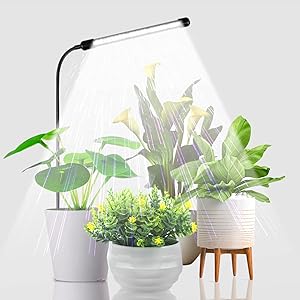
The Juhefa Grow Light delivers a 6000K full-spectrum light, closely mirroring natural daylight with its combination of 40 white and 8 red LEDs, making it exceptionally well-suited for succulents, herbs, seedlings, and various small indoor plants. This preferred home garden lighting solution is meticulously tuned to maximize photosynthesis, ensuring your beloved plants absorb the exact wavelengths they need for optimal growth and vitality. Its impressive color rendering index (CRI) of up to 95 also means it can double as a clear and pleasant work or reading lamp, seamlessly integrating into your daily environment without harsh, unnatural light. It’s an ideal gift for any gardening enthusiast looking to boost their indoor plant game.
Designed for convenience and flexibility, the lamp features five levels of dimming, allowing you to easily select the most appropriate brightness for your plants’ specific growth requirements, conserving electricity while providing adequate illumination. The 360° flexible, thickened gooseneck allows for precise angle adjustments between the lamp and your plants, ensuring every part receives sufficient light. With an extended 77-inch USB cable, powering the unit is versatile and straightforward, whether from a wall adapter, power bank, or laptop.
- Pros:
- 6000K sunlight full spectrum promotes healthy growth
- High efficiency with 5 dimming levels
- Flexible 360° gooseneck for targeted illumination
- Cons:
- Best suited for small plants or individual pots
- Requires a USB power source, adapter not always included
5. GYTF Halo Plant Grow Light with Adjustable Pole

- Spectrum: 6000K White Full Spectrum
- LED Configuration: 6 Red + 6 Blue + 36 White LEDs
- Timer Options: 4/8/12/18 Hours
- Adjustable Height: 7 to 18 inches
The GYTF Halo Plant Grow Light offers an elegant and effective solution for indoor succulents, mini bonsai, and other small plants. Its distinctive 6000K white circle light, powered by a thoughtful mix of 6 red, 6 blue, and 36 white LED beads, provides a full spectrum that closely mimics natural sunlight. This professionally designed spectrum is crucial for promoting vigorous growth and vibrant colors in potted plants, especially those deprived of sufficient natural light.
This freestanding grow light excels in user convenience with its upgraded timer functionality, offering four flexible settings: 4, 8, 12, or even 18 hours of illumination. Once set, the light intelligently cycles on and off daily, eliminating the need for constant manual operation. You can also adjust the brightness to cater to the specific light requirements of different plant species or growth stages. Constructed from high-quality aluminum, the sturdy pole can be effortlessly extended from 7 to 18 inches and rotated 180°, allowing you to precisely position the light for optimal coverage.
- Pros:
- Aesthetic halo design complements plant displays
- 6000K full spectrum promotes strong growth
- Versatile timer with 4/8/12/18-hour options
- Cons:
- Height range may be too limited for very tall plants
- Intended for soil-based potted plants, not hydroponics
6. Sondiko Tall Full Spectrum Grow Light with 9 Dimmable Levels

- Spectrum: Full Spectrum (Red/Blue blend)
- Timer: Cycle Timer (3H/9H/12H auto on)
- Dimming Levels: 9
- Design: Adjustable Lamp Angle & Gooseneck
The Sondiko Tall Full Spectrum Grow Light offers a comprehensive and intelligent solution for nurturing your indoor succulents, outperforming many single-spectrum red and blue LED lights with its highly uniform full-spectrum output. This sophisticated blend of wavelengths precisely emulates natural sunlight, providing all the crucial light necessary for photosynthesis and accelerating growth across every stage.
A standout feature is the upgraded cycle timer, a significant improvement over one-way timers. You can set the light to illuminate for 3, 9, or 12 hours, after which it will automatically turn on again after 21, 15, or 12 hours, respectively. This “set it and forget it” functionality is invaluable, especially when you’re away from home. The grow light also boasts a larger illumination area, facilitated by its adjustable lamp head and flexible gooseneck, allowing for 360-degree light positioning to cover multiple plants or larger specimens.
- Pros:
- Superior full-spectrum light for all growth stages
- Advanced “cycle timer” for hassle-free automation
- Extensive 9 dimmable levels and 3 lighting modes
- Cons:
- “Tall” implies a specific form factor that might not suit all setups
- Full spectrum blend might not be tunable to specific R/B ratios
7. FECiDA Clip Grow Lights with 9W Power

- Quantity: 2-Pack
- Power: 9W per light (with home plug)
- LEDs: 42 High Quality LEDs (1000 Lumen)
- Spectrum: Natural Sunlight Full Spectrum
The FECiDA 2-Pack Clip Grow Lights truly live up to their “Game Changer” moniker, offering a powerful and convenient solution for your indoor succulents and bonsai. Unlike many standard 5W adapter lights, these come with a 9W home plug, ensuring a brighter and more effective output with 42 high-quality LEDs delivering 1000 lumens of light. This significant boost in power ensures your plants receive ample intensity for robust growth. The natural sunlight full spectrum emitted by these lights is specifically designed to be beneficial for your plants’ health and equally comfortable for your eyes, preventing the harsh glare often associated with grow lights.
Convenience is paramount with these grow lights, featuring a built-in timer with 4, 8, or 12-hour auto on/off cycles, allowing you to confidently leave your plants to their perfect lighting schedule, even when you’re not home. The versatile multiple-installation design means you can easily clip them onto a panel, desk, or directly onto a plant pot, while the 360° gooseneck provides complete flexibility to direct light precisely where it’s needed. This 2-pack offers excellent value, allowing you to illuminate multiple plants or achieve broader coverage.
- Pros:
- Higher 9W power output delivers brighter light
- Comes in a convenient 2-pack for broader coverage
- Natural sunlight full spectrum is eye-friendly
- Cons:
- Might be too intense for very light-sensitive seedlings
- Only three timer duration settings
How to Choose Grow Lights For Succulents
Succulents are beloved for their unique shapes, vibrant colors, and relatively low maintenance. However, their primary requirement, abundant sunlight, can be a challenge to provide indoors, especially during darker months or in homes with limited natural light. This is where grow lights become an indispensable tool for any indoor succulent enthusiast. Choosing the right grow light ensures your succulents not only survive but thrive, maintaining their compact form and stunning stress colors. This comprehensive guide will walk you through everything you need to know to select the perfect grow light for your succulent collection.
Why Succulents Need Grow Lights
Succulents are native to arid, sun-drenched regions of the world, accustomed to long hours of intense sunlight. When grown indoors, they often don’t receive the same quality or quantity of light, leading to a host of problems. Grow lights mimic the sun’s beneficial spectrum, providing the energy your plants need for photosynthesis and healthy growth.
Understanding Succulent Light Requirements
Most succulents require at least 6-8 hours of direct sunlight per day, with many preferring even more. This intensity and duration are crucial for their metabolic processes. Without it, they activate defense mechanisms that result in undesirable changes.
Consequences of Insufficient Light
The most common sign of insufficient light in succulents is etiolation, or “stretching.” This occurs when the plant elongates and spaces out its leaves in an attempt to find more light, resulting in a leggy, weak, and often pale appearance. Etiolation is irreversible, making prevention key. Other issues include loss of vibrant coloration, stunted growth, and increased susceptibility to pests and diseases due to weakened immunity.
Key Factors to Consider When Choosing Grow Lights
Selecting the best grow light involves understanding several technical aspects and matching them to your succulents’ needs and your living space. Here are the critical factors to evaluate:
1. Light Spectrum
The light spectrum refers to the range of wavelengths a light source emits. Different wavelengths play different roles in plant growth.
Full Spectrum vs. Red/Blue
Historically, grow lights often featured a combination of red and blue LEDs, as these wavelengths are most critical for photosynthesis. Blue light promotes vegetative growth and compact form, while red light is essential for flowering and fruiting. However, “full spectrum” grow lights have gained popularity. These lights emit a broader range of wavelengths, including green and yellow, more closely mimicking natural sunlight. They typically appear white to the human eye, making them more aesthetically pleasing for indoor use.
Ideal Spectrum for Succulents
For succulents, full-spectrum lights are generally preferred. They provide a balanced light that supports all aspects of growth, from maintaining tight rosettes to encouraging stress colors. Look for lights that emphasize white light (e.g., 4000K-6500K color temperature), as this often indicates a good balance across the spectrum. While red/blue lights can work, their purple hue can be less pleasant in a living area and may not provide the full range of benefits of a well-balanced full spectrum.
2. Light Intensity (PAR and PPFD)
Intensity is arguably the most crucial factor for succulents. It’s not just about how “bright” a light looks to your eyes, but how much photosynthetically active radiation (PAR) it delivers.
What is PAR and PPFD?
PAR (Photosynthetically Active Radiation) refers to the spectral range of light that plants use for photosynthesis (400 to 700 nanometers). PPFD (Photosynthetic Photon Flux Density) measures the number of photosynthetically active photons that fall on a given surface area per second (micromoles per square meter per second, μmol/m²/s). PPFD is the best metric for comparing grow light intensity.
Optimal PPFD for Succulents
Succulents generally thrive with high light intensity. Ideal PPFD values for succulents typically range from 200 to 400 μmol/m²/s, sometimes even higher for very light-hungry varieties. Many consumer-grade grow lights will list a μmol/s value (Photosynthetic Photon Flux, PPF) and often a PPFD value at a specific distance (e.g., @6 inches). Pay close attention to these numbers.
Distance from Plants
The intensity of light decreases significantly with distance. A light that provides excellent PPFD at 6 inches might be too weak at 12 inches. Always check the recommended hanging height or distance from the canopy. For succulents, placing the light closer is usually better, but avoid scorching by introducing new lights gradually and observing your plants for signs of stress.
3. Power Output and Efficiency (Watts vs. PPF/PPE)
Understanding power consumption is important for both your electricity bill and the light’s effectiveness.
Understanding Watts
Watts measure the amount of electrical power a light fixture consumes. While higher wattage often correlates with brighter lights, it’s not a direct measure of photosynthetic effectiveness. Modern LED lights are highly efficient, meaning they can produce significant light with lower wattage compared to older technologies like incandescent bulbs.
Focus on PPF/PPE
PPF (Photosynthetic Photon Flux) measures the total amount of PAR light produced by a fixture (μmol/s). PPE (Photosynthetic Photon Efficacy) measures how efficiently a light fixture converts electrical energy into PAR light (μmol/J). Higher PPF and PPE values indicate a more effective and energy-efficient grow light. For succulents, aim for lights with a good balance of adequate PPFD (at plant level) and high PPE.
Energy Consumption
LED grow lights are generally the most energy-efficient option, consuming less electricity and lasting longer than traditional bulbs. While the initial investment might be higher, the long-term savings on electricity and bulb replacement make them a cost-effective choice.
4. Heat Emission
Heat is a byproduct of any light source, and excessive heat can damage your succulents.
LED vs. Other Light Types
LEDs are known for producing less heat compared to older technologies like High-Intensity Discharge (HID) or even some fluorescent bulbs. This makes them ideal for enclosed spaces or for placing close to plants without the risk of heat stress.
Preventing Heat Stress
Even with LEDs, if a light is too powerful or placed too close, it can cause leaf burn. Good airflow around your plants and grow lights is always recommended. Some grow lights feature built-in heat sinks or cooling fans to manage their operating temperature.
5. Form Factor and Coverage Area
The physical design of the grow light impacts where and how you can use it, as well as how many plants it can illuminate.
Clip-on Lights
Excellent for small collections or individual plants. They are versatile, easy to attach to shelves, desks, or even pots, and usually come with flexible goosenecks for precise positioning.
Panel Lights
Offer broader and more uniform coverage, suitable for trays of seedlings or larger collections. These are often hung above plants.
Desk/Stand Lights
Feature an adjustable pole or stand, ideal for small to medium-sized plants on a tabletop. They offer good height adjustment for different plant sizes.
Halo Lights
Aesthetically pleasing circular lights that sit directly above individual pots, often with adjustable poles. Perfect for showcasing single succulents.
Ensuring Even Coverage
Consider the spread of the light. A single, focused beam might not be enough for a wide collection. Multiple smaller lights or a larger panel might be necessary to ensure all your succulents receive adequate light.
6. Timer and Dimming Features
These features offer convenience and customization, crucial for replicating natural light cycles.
Benefits of Timers
Succulents require a consistent photoperiod (duration of light exposure) for optimal health, typically 12-16 hours per day. A built-in timer automates this process, ensuring your plants receive consistent light exposure without you having to remember to turn the light on and off daily. Look for cycle timers that turn on at the same time each day.
Importance of Dimmable Settings
Dimmable settings allow you to adjust the light intensity. This is useful for seedlings that need lower intensity, or for gradually acclimating new plants to brighter light. It also allows you to fine-tune the light for different succulent species or stages of growth without needing to adjust the light’s height.
7. Durability and Safety
Ensuring your grow light is safe and built to last is paramount.
Build Quality
Look for lights made from durable materials that can withstand continuous operation. Good heat dissipation is key for longevity.
Certifications (ETL, UL)
Safety certifications like ETL or UL indicate that the product has been tested and meets recognized safety standards. This is especially important for electrical appliances operating near water.
Lifespan
LEDs typically boast very long lifespans (e.g., 25,000 to 50,000 hours), meaning you won’t need to replace them frequently, saving time and money.
Types of Grow Lights for Succulents
While many types of grow lights exist, LEDs are overwhelmingly the best choice for indoor succulents.
LED Grow Lights
LEDs (Light Emitting Diodes) are the gold standard for succulent grow lights. They are energy-efficient, produce minimal heat, have a long lifespan, and are available in various spectrums, including full spectrum. Their compact size allows for versatile designs, from small clip-ons to large panels.
Fluorescent Grow Lights (T5/CFL)
T5 fluorescent lights can work for succulents, especially for supplementing existing light or for propagating seedlings. They are more energy-efficient than older fluorescents but still generate more heat and consume more power than comparable LEDs. Compact Fluorescent Lights (CFLs) can also be used for individual plants but are generally less efficient and less customizable than LEDs.
HID Grow Lights (HPS/MH)
High-Intensity Discharge lights, such as High-Pressure Sodium (HPS) and Metal Halide (MH), provide very intense light. While effective for large-scale commercial growing, they produce significant heat, consume a lot of electricity, and are typically too powerful and impractical for home succulent collections.
Setting Up Your Grow Lights for Success
Once you’ve chosen your grow light, proper setup is crucial for maximizing its benefits.
Light Duration (Photoperiod)
Most succulents thrive with 12 to 16 hours of light per day, followed by 8 to 12 hours of darkness. The dark period is just as important as the light period for plant respiration and metabolic processes. Using a timer is highly recommended to maintain this consistency.
Positioning and Distance
As discussed, light intensity diminishes rapidly with distance. For most LED grow lights, placing them 6-12 inches above your succulents is a good starting point. However, always refer to the manufacturer’s recommendations. Observe your plants for signs of stretching (too far) or burning (too close).
Monitoring Your Succulents
Your plants will tell you if the light setup is working. Look for compact growth, vibrant colors, and no signs of stretching. If leaves start to look bleached or crispy, the light might be too intense or too close. If they begin to stretch, move the light closer or increase its intensity/duration.
Common Mistakes to Avoid
Even with the best equipment, mistakes can happen. Being aware of these common pitfalls can save your succulents.
Underestimating Light Needs
The most common mistake is assuming that “bright indirect light” is enough. For most succulents, this leads to etiolation. They truly need direct, intense light to thrive.
Over-lighting
While less common than under-lighting, providing too much intense light too quickly can scorch leaves, especially for plants not accustomed to it. Introduce new, powerful lights gradually.
Ignoring Heat
Even if an LED light runs cool to the touch, if it’s placed too close to your plants, the concentrated light energy can still generate enough heat on the leaf surface to cause damage. Ensure good air circulation.
Conclusion
Investing in a good quality grow light is one of the best decisions you can make for your indoor succulent collection. By understanding the importance of full spectrum, light intensity (PPFD), and proper positioning, you can provide your desert beauties with an environment where they will truly flourish. With the right grow light, your succulents will maintain their charming, compact forms, display their stunning stress colors, and bring vibrant life to your home all year round. Happy growing!