Best Manual Log Splitters of 2026
Unlike their gas-powered counterparts, manual splitters offer a quieter, more portable, and often safer method for processing wood, requiring no fuel or complex maintenance. This guide will help you navigate the choices, ensuring you select the best manual log splitter to keep your woodpile stocked and your efforts efficient.
1. SPEED FORCE Log Splitter

- Material: High Grade Nodular Cast Iron
- Splitter Dimensions: 6″ x 3.5″ x 9″
- Weight: 9.8 Lbs (Total Set)
- Mounting: 4-hole safety base guard
The SPEED FORCE Log Splitter offers a unique two-piece design that separates the sharpening blade from the safety base guard. This configuration provides an extra layer of protection, keeping your hands well away from the strike zone while you work. Made from nodular cast iron with an all-weather powder coating, it is built to survive the elements and heavy impact.
Setting up this tool is straightforward, requiring only a flat stump and a few screws for maximum stability. Because of its portable size and weight, it serves as an excellent companion for RV trips or backyard fire pits. It effectively eliminates the need for swinging a sharp axe, making kindling production a much safer task for the whole family.
Pros: Durable cast iron, portable for camping, high safety standards.
Cons: Requires a perfectly flat mounting surface.
See the SPEED FORCE Log Splitter
2. Kindling Cracker Firewood Splitter
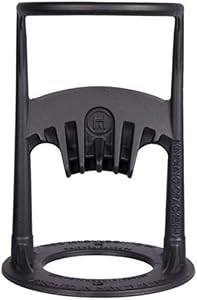
- Inside Diameter: 6.5 inches
- Material: High-quality Australian cast iron
- Dimensions: 12″L x 6.5″W
- Head Type: Splitting wedge
The Kindling Cracker is the industry standard for safe wood splitting, originally designed in Australia. Its cast iron frame features a top ring that holds the wood in place, ensuring that your fingers are never near the blade when you strike the log with a mallet. This design allows for consistent kindling with significantly less force than a traditional axe.
This model is virtually maintenance-free and features a solid, one-piece construction that can last for generations. While it is compact, it is perfect for standard firewood logs. It is a reliable choice for those who want a simple, award-winning design that prioritizes safety without sacrificing the efficiency of a high-quality splitting wedge.
Pros: Award-winning safety design, maintenance-free, very sturdy.
Cons: Limited to logs under 6.5 inches in diameter.
See the Kindling Cracker Firewood Splitter
3. Kindling Cracker XL
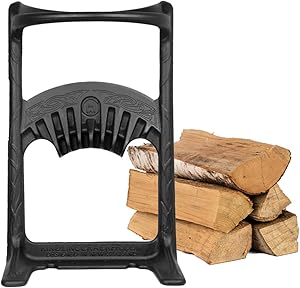
- Inside Diameter: 9 inches
- Height: 17 inches
- Body Material: Cast iron
- Weight: Approximately 21 lbs
The Kindling Cracker XL takes everything great about the original and scales it up for serious wood processing. With a 9-inch inside diameter, it can handle much larger logs that would never fit in the standard version. The increased height of 17 inches also allows for longer pieces of firewood to be split with ease and stability.
This heavy-duty tool is ideal for those who rely on wood stoves for primary heating. The massive cast iron frame absorbs impact well and stays stationary during use. Although it is heavier and less portable than its smaller sibling, its ability to handle larger timber makes it a powerhouse for home firewood management and large outdoor fire pits.
Pros: Handles large logs, extra height for long wood, extremely durable.
Cons: Quite heavy and less portable for travel.
4. ZIMOMOTA Firewood Kindling Splitter

- Base Design: X-shaped for superior stability
- Construction: Single-piece reinforced cast iron
- Warranty: Lifetime Warranty
- Coating: Eco-friendly rust-resistant finish
The ZIMOMOTA splitter stands out due to its reinforced X-shaped base, which provides a wider footprint for better stability. Unlike some competitors, it is cast as a single piece without welds, which prevents cracking at high-stress points. The thickened support columns are designed to withstand years of heavy mallet strikes without bending or warping.
This tool is exceptionally user-friendly, featuring a non-sharp blade design that relies on geometry and force rather than a razor edge to split wood. This makes it safer to handle and store. Coupled with a lifetime warranty, it offers great peace of mind for buyers looking for a long-term solution for their fireplaces, saunas, or camping needs.
Pros: Highly stable base, weld-free construction, lifetime warranty.
Cons: Slightly bulkier footprint due to the X-base.
See the ZIMOMOTA Firewood Kindling Splitter
5. Fiskars Wood Splitter

- Handle Length: 36 inches
- Handle Technology: IsoCore shock-absorbing system
- Blade Material: Forged heat-treated steel
- Weight: 8 lbs
The Fiskars IsoCore Wood Splitting Maul is a masterclass in ergonomic tool design. Unlike stationary splitters, this is a heavy-duty swinging tool meant for medium to large logs. The patented IsoCore shock control system reduces the vibration felt by the user, making it much more comfortable for extended sessions of wood splitting compared to traditional wood-handled axes.
The blade geometry is optimized for “one-strike” splits, featuring a flared head that forces wood apart efficiently. It includes a riveted head that will not slide down or snap off, and a textured non-slip grip for better control. This is the ideal tool for those who prefer the traditional splitting method but want modern technology to protect their joints and increase efficiency.
Pros: Excellent shock absorption, powerful splitting force, ergonomic grip.
Cons: Requires physical swinging and higher skill level.
6. XtremepowerUS 12-Ton Hydraulic Log Splitter

- Force: 12 Tons of driving force
- Capacity: 18″ long x 8″ wide logs
- Operation: Manual 2-speed hydraulic pump
- Mobility: Two large wheels and comfort handles
For those dealing with tough, knotty timber that a mallet and wedge cannot handle, the XtremepowerUS 12-Ton Hydraulic Log Splitter is the perfect upgrade. It uses a manually operated hydraulic ram to generate massive pressure, allowing you to split large logs with relatively little physical effort. The 2-speed pump allows for fast movement until the blade hits the wood, then switches for power.
The inclusion of large wheels makes this heavy steel unit easy to transport across a driveway or lawn. It is completely independent of gas or electricity, making it an eco-friendly and quiet alternative to motorized splitters. The spring-loaded return mechanism resets the ram quickly, allowing you to move through your wood pile with surprising speed and efficiency.
Pros: Massive splitting force, no power source needed, easy to move.
Cons: Requires more storage space than manual wedges.
See the XtremepowerUS 12-Ton Hydraulic Log Splitter
7. BAYQISI Kindling Splitter
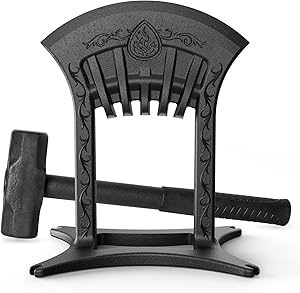
- Height: 9.8 inches
- Weight: 7.5 lbs
- Blade Design: Axe-shaped open style
- Included: 3lb hammer and mounting screws
The BAYQISI Kindling Splitter features an open-style blade design that allows it to accommodate logs of various diameters without being restricted by a top ring. This versatility is a major advantage for users with irregular wood pieces. The blade itself is axe-shaped to provide a more efficient cutting edge, and it even comes with a rubber safety sleeve for protection during storage.
A standout feature of this package is the inclusion of a 3-pound hammer, making it a complete ready-to-use kit right out of the box. The one-piece cast iron molding is finished with an attractive surface pattern and rust-resistant paint. It is a highly durable and convenient tool for preparing dry logs for fireplaces, barbecues, or outdoor wood-burning saunas.
Pros: Includes a hammer, open design for large logs, rust-resistant.
Cons: Not suitable for splitting wet or green wood.
See the BAYQISI Kindling Splitter
8. Sun Joe Cordless Manual Log Splitter
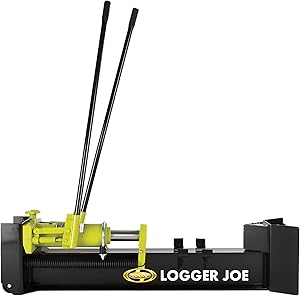
- Force: 10-ton hydraulic driving force
- Log Capacity: Up to 18″ long and 8″ wide
- Frame: Solid steel construction
- Features: Log cradle and rear wheels
The Sun Joe Manual Log Splitter provides a powerful 10-ton hydraulic solution for home wood processing. It features a cradle design that holds the log securely in place, preventing split wood from falling or flying off during the process. The two-speed manual pump allows you to choose between speed and power depending on the density of the wood you are splitting.
This unit is built for durability with a solid steel frame that can handle year after year of outdoor work. Because it requires no gas or electricity, it is perfect for remote locations or quiet neighborhoods. The built-in wheels make it surprisingly portable for its size, allowing you to bring the tool to the wood pile rather than hauling heavy logs across the yard.
Pros: Safer log cradle, portable with wheels, quiet operation.
Cons: Slower than electric or gas-powered models.
See the Sun Joe Cordless Manual Log Splitter
9. Hi Flame Wood Kindling Splitter
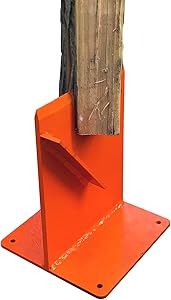
- Height: 9.5 inches
- Weight: 9 lbs
- Material: Powder-coated steel
- Color: High-visibility Orange
The Hi Flame Wood Kindling Splitter is a robust, handmade tool designed for high efficiency and safety. Its bright orange powder-coated finish makes it easy to spot in a workshop or backyard, reducing the risk of accidental trips. The four pre-drilled bolt holes in the base allow for a permanent, rock-solid installation on a wooden block or stump for maximum safety.
This splitter is specifically engineered for speed, allowing users to balance a log and split it instantly with a single hammer strike. At 9 lbs, it has enough heft to remain stable during use while still being light enough to pack for a camping trip. It is an excellent, low-maintenance choice for anyone needing a safe and fast way to create kindling for a wood stove.
Pros: Bright high-visibility color, solid steel build, very fast operation.
Cons: Does not include mounting screws.
See the Hi Flame Wood Kindling Splitter
10. Poffattr Firewood Kindling Splitter

- Height: 9.8 inches
- Blade Width: 6.1 inches
- Weight: 7.0 lbs
- Blade Edge: Hand-ground sharp edge
The Poffattr Firewood Kindling Splitter is designed with a hand-ground sharp blade that requires minimal effort to penetrate wood. Made of premium cast iron, it is exceptionally hard and resistant to rusting thanks to its all-weather coating. The open construction is a major benefit, as it allows users to split logs that are wider than the footprint of the splitter itself.
This model is particularly approachable for users of all strength levels, including those who may find traditional axes too heavy or dangerous. It comes with a black safety cover to protect the blade and the user when the tool is not in use. With its compact size and included mounting screws, it is a versatile choice for backyard firewood stacks or pizza oven preparation.
Pros: Hand-ground sharpness, includes safety cover, fits larger logs.
Cons: Lighter weight may require bolting down for stability.
See the Poffattr Firewood Kindling Splitter
How to Choose Manual Log Splitter
Splitting logs by hand is a time-honored tradition that connects us to nature and provides a deeply satisfying sense of accomplishment. Beyond the rustic charm, manual log splitters offer numerous advantages: they’re quieter, require no fuel or electricity, are generally more portable, and provide a fantastic workout. However, with a variety of designs on the market, choosing the “best” one can feel daunting. The ideal manual log splitter for you will depend on several factors, including the type and size of wood you’re processing, your physical capabilities, safety concerns, and portability needs. This comprehensive guide will walk you through the different types of manual log splitters and the key considerations to help you make an informed decision and keep your woodpile stocked with ease and efficiency.
Understanding Manual Log Splitter Types
Manual log splitters come in several distinct categories, each with its own method of operation and suitability for different tasks. Understanding these types is the first step in narrowing down your options.
Splitting Mauls and Axes
The most traditional form of manual log splitting involves a maul or a heavy axe. A splitting maul typically features a heavier head (6-12 lbs) with a wedge-shaped blade designed to burst wood apart, rather than cut through it like a felling axe. They often have longer handles for increased leverage and striking power. Axes, while capable, are generally lighter and have thinner blades more suited for cutting or limbing, making them less efficient for splitting larger, knotty logs. Mauls rely on brute force and technique, making them ideal for individuals who enjoy a vigorous workout and want a straightforward, highly portable tool. They are excellent for medium-sized logs but can be physically demanding for large volumes or very dense wood.
Wedge and Hammer Splitters
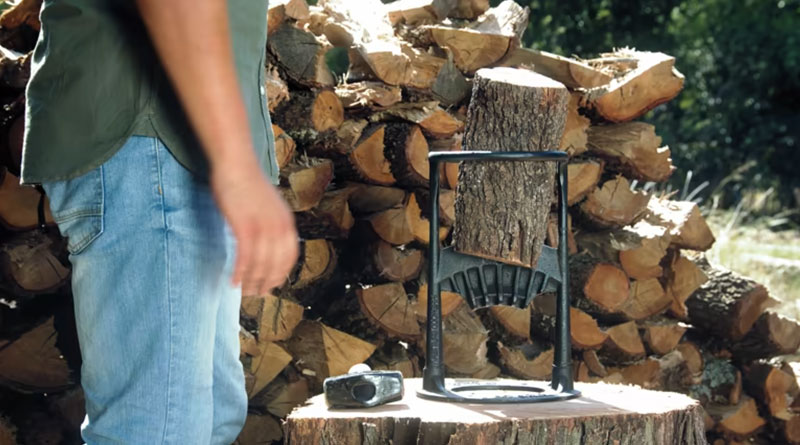
This category includes devices that use a separate striking tool. The “Kindling Cracker” style is a prime example, where a fixed wedge is mounted in a sturdy frame. Logs are placed on top of the wedge and struck with a hammer or mallet, driving them down to split against the stationary blade. This design is exceptionally safe, as there are no moving blades near your hands. Another variation is the slide hammer splitter, where a heavy-duty wedge is attached to a sliding weight on a shaft. You lift the weight and drive it down onto the wedge, which is placed on the log. This technique offers more controlled power than a maul and reduces the risk of errant swings or flying debris. Both types are great for safety-conscious users or those with limited swinging space, particularly for kindling and smaller logs.
Kindling Crackers/Fixed Wedges
Specialized kindling crackers, often resembling a cast-iron ring with a splitting wedge at the base, are designed specifically for creating smaller pieces of kindling from larger logs. They prioritize safety by keeping hands away from the blade and simplify the process of breaking down split logs into fire-starting material. They are usually compact, durable, and require minimal effort with a small hammer or even another piece of wood to strike the log. These are a must-have for anyone who frequently needs kindling for fireplaces, campfires, or wood stoves, offering an incredibly safe and efficient way to prepare smaller pieces.
Manual Hydraulic Splitters
For those who need serious splitting power but want to avoid gasoline engines or electrical cords, manual hydraulic log splitters are the answer. These machines use a hand-pumped hydraulic ram to exert immense force (often 10-20 tons) onto a log, pushing it against a splitting wedge. While slower than powered models, they require significantly less physical exertion than mauls or axes. They are ideal for larger, tougher logs and for individuals who may not have the physical strength for repeated heavy swings but still want manual control. Many models include wheels for easier transport, making them a good compromise between raw power and manual operation.
Key Factors to Consider
Once you understand the different types, consider these crucial factors to select the best manual log splitter for your specific needs.
Log Size and Type
This is perhaps the most important consideration. Are you splitting small kindling, medium-sized logs for a fireplace, or large, knotty rounds from a downed tree? For kindling, a Kindling Cracker or a smaller axe might suffice. For medium logs, a sturdy splitting maul or a slide hammer splitter works well. For very large or tough logs, a manual hydraulic splitter will be the most effective, requiring less direct physical effort. Also consider the wood type; hardwoods like oak or maple will require more force to split than softer woods like pine.
Splitting Force/Power
The amount of force a splitter can generate dictates the size and toughness of logs it can handle. Mauls and axes rely on the user’s strength and technique. Slide hammer splitters provide more concentrated force than a simple maul. Manual hydraulic splitters offer the most mechanical advantage, often rated in tons of force, allowing them to split dense, knotty logs with relative ease.
Safety Features
Safety should always be a top priority. Fixed-wedge kindling crackers are inherently safer as they keep your hands away from the blade. Slide hammer splitters minimize flying debris and erratic swings. If using a maul or axe, ensure it has a shock-absorbing handle and a good grip to prevent slips. Always wear appropriate safety gear, including gloves, eye protection, and sturdy footwear, regardless of the splitter type.
Portability and Storage
How and where will you use and store your splitter? Axes and mauls are highly portable and take up minimal space. Kindling crackers are also compact and can often be mounted. Slide hammer splitters are generally heavier but still maneuverable. Manual hydraulic splitters are the largest and heaviest, though many come with wheels for easier relocation. Consider if you need to move it frequently between different work areas or store it in a small shed.
Durability and Material
A good manual log splitter should be built to last. Look for tools made from high-quality materials like forged steel, cast iron, or heavy-duty carbon steel. Handles made from fiberglass or composite materials often offer better durability and shock absorption than traditional wood. Rust-resistant coatings are also a plus, especially if the tool will be stored outdoors or in humid conditions. Reading reviews about product longevity and manufacturer warranties can provide insight into a tool’s expected lifespan.
Ergonomics and Comfort
Since manual splitting is a physical activity, ergonomics are key to preventing fatigue and injury. Look for handles with comfortable, non-slip grips and designs that minimize vibrations and shock. The length of the handle on a maul or axe should suit your height for optimal leverage and control. For hydraulic splitters, consider the pump handle design and how comfortable it is to operate for extended periods.
Maintenance
Manual splitters generally require very little maintenance compared to powered machines. Keep blades sharp (for axes/mauls/wedges) and clean, and occasionally lubricate moving parts on slide hammer or hydraulic models. Protecting metal components from rust is also important. Fixed-wedge splitters like kindling crackers are virtually maintenance-free, needing only occasional cleaning.
Benefits of Manual Log Splitting
Choosing a manual log splitter offers several compelling benefits:
- Cost-Effective: Generally more affordable than powered splitters.
- Quiet Operation: No engine noise, perfect for residential areas or quiet environments.
- Eco-Friendly: No fuel emissions.
- Portability: Most manual splitters are easy to move and store.
- Physical Activity: Provides a great workout and builds strength.
- Reduced Maintenance: Fewer parts mean less to repair or service.
- Self-Sufficiency: Operates independently of power sources.
Tips for Effective and Safe Splitting
Regardless of the manual splitter you choose, these tips will enhance your experience:
- Start with smaller logs: If new to splitting, begin with smaller, easier-to-split logs to practice technique.
- Use a sturdy block: Place logs on a solid, level splitting block (like a large tree stump) to absorb impact and raise the log to a comfortable height.
- Find the weak spot: Look for natural cracks or knots. Aim for the edge of the log or where it’s already beginning to split.
- Keep blades sharp: A sharp edge on a maul or wedge makes splitting significantly easier and safer.
- Wear protective gear: Always use safety glasses, work gloves, and steel-toed boots.
- Clear the area: Ensure no one is standing nearby and that there’s no debris that could trip you.
- Pace yourself: Manual splitting is physical work. Take breaks to avoid fatigue, which can lead to accidents.
Conclusion
The best manual log splitter is the one that fits your specific needs, strength, and the type of wood you intend to process. Whether you opt for the raw power of a splitting maul, the innovative safety of a kindling cracker, or the controlled force of a hydraulic model, investing in a quality tool will make your firewood preparation safer, more efficient, and ultimately more enjoyable. By considering log size, splitting power, safety, portability, and durability, you can confidently choose a manual log splitter that will serve you well for many seasons, keeping your fires burning bright with the satisfaction of a job well done.